


Debo Lanlehin has criticised Seyi Makinde’s political manoeuvring, arguing that the governor faces a tougher battle replicating his 2019 success in 2027.
An All Progressives Congress (APC) political figure and youth leader in Oyo State, Debo Lalenhin, has criticised Governor Seyi Makinde’s political strategy ahead of the 2027 general election, arguing that the coalition formula that helped the governor win the 2019 Oyo State governorship election may not succeed at the national level.
Lanlehin, in a political commentary titled “Seyi Makinde and the Political Card of a Chameleon,” described the governor’s political approach as one characterised by adaptation, alliances and realignments depending on the prevailing political environment.
According to him, while Makinde’s supporters may regard the governor’s political flexibility as strategy, his critics see it as an attempt to change political positions and alliances whenever circumstances demand.
Lanlehin argued that the strategy worked for Makinde in 2019 because opposition parties in Oyo State were able to put aside their differences and support a common candidate against the then-ruling political establishment.
He, however, maintained that the political circumstances surrounding the 2027 presidential election are considerably different.
Makinde’s 2019 victory
Lanlehin pointed to the 2019 Oyo State governorship election as the strongest example of Makinde’s ability to benefit from opposition cooperation.
He noted that several opposition forces, including the Peoples Democratic Party (PDP), African Democratic Congress (ADC) and Zenith Labour Party (ZLP), were involved in the political realignment that preceded the election.
According to him, the objective was not solely about Makinde but also about defeating the political establishment in Oyo State at the time.
Lanlehin said the arrangement succeeded because the political contest was largely centred on the state and the various interests involved were eventually able to settle on a common political vehicle.
“That coalition worked because the stakes were state level, egos were smaller, and everyone agreed on one vehicle,” he stated.
Makinde went on to win the 2019 Oyo governorship election and subsequently secured re-election in 2023.
However, Lanlehin believes the political dynamics have changed significantly as Makinde’s political calculations increasingly move towards the national stage.
2027 presidential race changes the equation
According to the APC youth leader, the central political conversation ahead of 2027 is no longer simply about controlling Oyo State but about who will emerge as the candidate capable of challenging the ruling party for the presidency.
Lanlehin referenced a statement attributed to Makinde during the inauguration of an APM campaign office in Abuja, where the governor reportedly said: “It doesn’t matter who we put forward, if we all come together, we will defeat them.”
Adebowale interpreted the statement as an indication that Makinde is advocating for opposition parties to unite behind a single candidate.
The APC figure, however, argued that the major difficulty would be getting the different presidential contenders and their political structures to surrender their ambitions in favour of one candidate.
He suggested that Makinde could be positioning himself as the possible beneficiary of such a consensus arrangement.
‘Makinde was not at the table’
One of Lanlehin’s major criticisms centres on Makinde’s reported absence from an August 31 meeting involving opposition parties discussing possible cooperation ahead of the 2027 elections.
He argued that the governor’s absence raises questions about his commitment to the process of building an opposition coalition.
Lanlehin recalled that Makinde was also not initially part of the political coalition that eventually supported him in the 2019 Oyo governorship election, although he later became its beneficiary.
The APC youth leader said the circumstances surrounding the 2027 negotiations are different because the political actors involved are now discussing a national alliance.
“You cannot preach ‘let us all come together’ from Abuja campaign offices, then skip the actual meeting where ‘coming together’ is being negotiated,” Lanlehin argued.
He said such a situation could create the impression among other opposition politicians that the objective is to build a coalition around Makinde rather than to establish an alliance in which all parties participate on equal terms.
It is important to note, however, that Lanlehin’s interpretation represents his political assessment of the situation and should not be taken as evidence of Makinde’s intentions.
Three reasons Lanlehin believes the strategy could fail
Lanlehin identified three major factors that, in his view, could prevent Makinde from reproducing his 2019 political success in 2027.
1. Too many presidential interests
The APC figure argued that the opposition landscape in 2027 is more crowded than it was in 2019.
He pointed to the presence of several nationally recognised political figures with presidential ambitions and established political structures.
Among those mentioned in his analysis are former Vice President Atiku Abubakar and former Anambra State Governor Peter Obi.
He maintained that the presence of multiple strong presidential contenders makes it difficult for one individual to persuade the others to withdraw from the race.
“In 2019, Makinde was the consensus. In 2027, every opposition leader has presidential ambition and a national base,” he wrote.
He argued that personal political interests, structures and ambitions could make the search for a consensus presidential candidate much more complicated.
2. Questions over trust
Debo Lanlehin raised questions about trust among opposition politicians.
He referred to political arrangements surrounding the 2019 Oyo coalition and argued that disagreements over expectations after the election could influence how politicians approach any fresh alliance.
According to him, opposition politicians may be reluctant to enter into another coalition based solely on verbal assurances.
He questioned what specific arrangements would be offered to political actors who may be required to abandon their individual presidential ambitions.
Lanlehin argued that the success of any 2027 coalition would depend heavily on clear agreements and guarantees between the participating parties.
3. National politics is different from Oyo
The APC youth leader also stressed the difference between building a political coalition in one state and constructing a national alliance capable of winning a presidential election.
According to him, the Nigerian presidential election involves wider regional, ethnic, political and strategic calculations.
He therefore believes that the opposition cannot simply reproduce the Oyo State model and expect an identical outcome.
“Nigeria is not Oyo,” Lanlehin declared.
He argued that national political negotiations would require the different regions and political interests to reach a much more complicated agreement before a single presidential candidate could emerge.
Lanlehin’s ‘chameleon’ analogy
The central theme of Adebowale’s commentary is his description of Makinde’s political approach as the “political card of a chameleon.”
The APC figure used the analogy to describe what he considers Makinde’s ability to adapt to changing political circumstances and establish alliances across political divides.
However, the description is clearly part of Lanlehin’s political commentary and does not constitute an independently established characterisation of the governor.
Makinde’s political supporters could equally describe his willingness to work across party lines as pragmatism and political flexibility.
Lanlehin, however, believes that the approach faces its biggest test ahead of the 2027 presidential election.
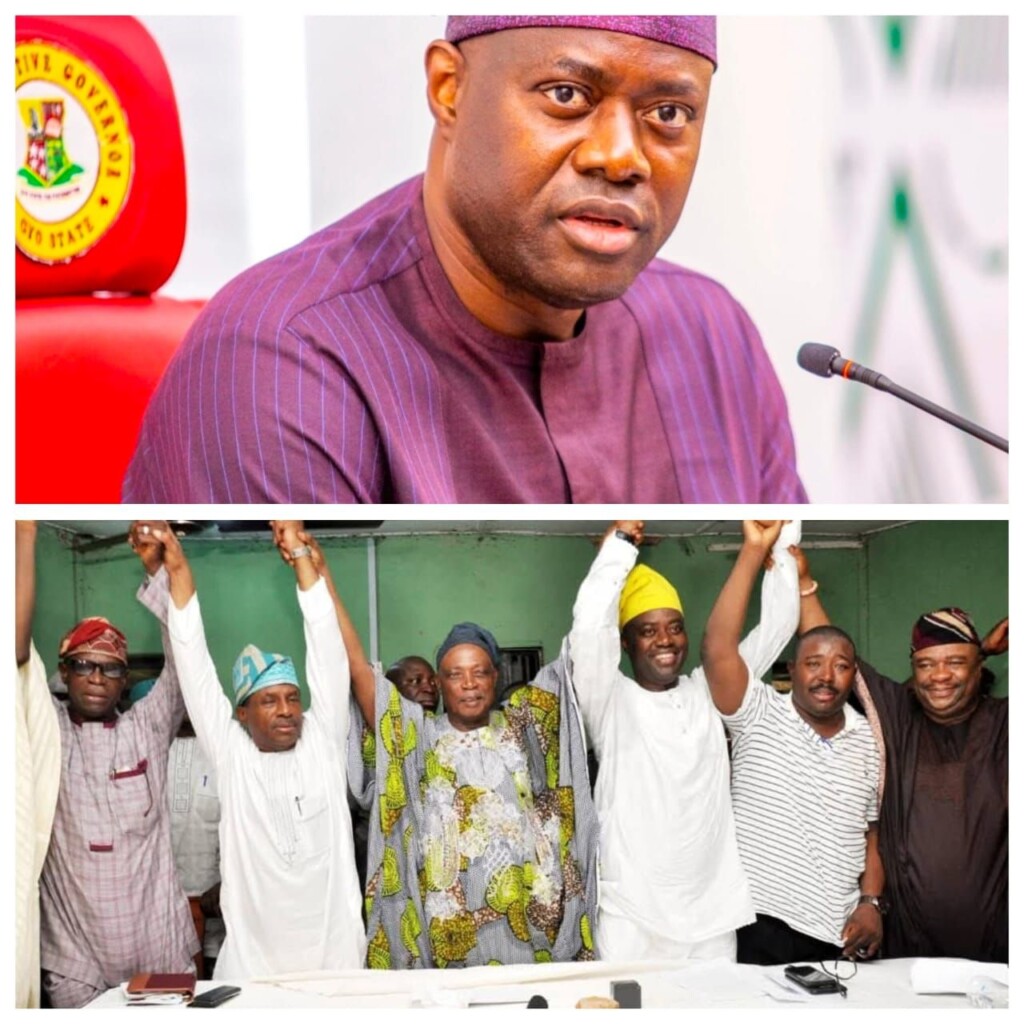
‘The play card has expired’
According to the APC youth leader, Makinde is attempting to apply the same political formula that helped him defeat the incumbent establishment in Oyo State in 2019 to the national presidential contest in 2027.
He argued that while coalition-building remains important, the governor would need more than public speeches to convince rival opposition leaders to support his presidential ambition.
“You don’t lead a coalition by giving speeches and missing meetings,” Lanlehin said.
He maintained that the 2019 political environment was fundamentally different from the 2027 presidential contest, where competing opposition leaders would have to make significant political sacrifices to support a consensus candidate.
He concluded that Makinde’s political strategy may therefore face serious resistance if he seeks to become the rallying point for the opposition ahead of the 2027 presidential election.
“2019 was about removing an incumbent in one state. 2027 is about trust, presence and sacrifice,” he stated.
For Adebowale Lanlehin, the political formula that helped Makinde capture Oyo State in 2019 may no longer carry the same weight at the national level.
“The play card has expired,” he concluded.
Ireport247news
About The Author
