

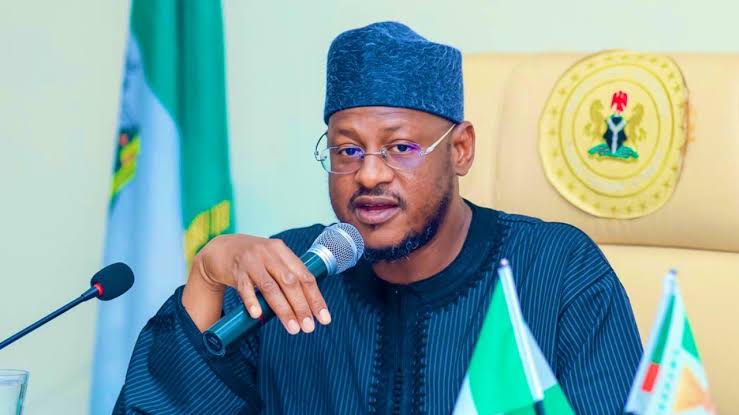
The Katsina State Government has stepped up its efforts to improve access to quality healthcare by recruiting more than 1,000 frontline health professionals and significantly expanding health insurance coverage across the state.
The latest measures form part of Governor Dikko Umaru Radda‘s broader strategy to strengthen the state’s healthcare system, improve medical services and reduce the financial burden of treatment on residents.
Governor Radda disclosed the developments on Friday during the official launch of the enrolment of 184,105 beneficiaries into the Basic Health Care Provision Fund (BHCPF).
The exercise, held at the General Hospital in Katsina, is expected to extend healthcare access to residents in all 361 political wards of the state, particularly vulnerable groups who often struggle to afford medical care.
Speaking at the ceremony, the governor described healthcare as one of the key priorities of his administration, stressing that investments in hospitals, medical personnel and health insurance are aimed at ensuring that every resident can receive quality treatment regardless of economic status.
According to him, enrolment in the Katsina State Health Insurance Scheme has continued to record steady growth over the past three years.
He revealed that the number of beneficiaries rose from 355,000 in 2023 to 583,460 in 2026, representing a 64 per cent increase.
He attributed the growth to deliberate government policies that have expanded awareness of the programme while making healthcare services more accessible to residents across the state.
Governor Radda also announced a new policy requiring all beneficiaries of government employment programmes to register under the state’s health insurance scheme.
He explained that the initiative is intended to protect workers and their families from unexpected medical expenses while accelerating Katsina’s progress toward achieving Universal Health Coverage.
He noted that the state has gained national recognition for its reforms in healthcare financing and service delivery.
According to him, the Katsina State Contributory Healthcare Management Agency (KTSCHMA) received the National Health Insurance Excellence Award in both 2024 and 2025, a feat that has attracted officials from several states seeking to understudy the agency’s operational model and best practices.
Beyond expanding insurance coverage, the governor highlighted several infrastructure projects completed under his administration.
He said the government has revitalised numerous primary healthcare centres to bring essential medical services closer to rural communities.
In addition, specialised facilities, including an Imaging and Cancer Treatment Centre and a Dialysis Centre, have been established to reduce the need for patients to travel outside the state for specialised care.
The administration has also upgraded several Comprehensive Health Centres into General Hospitals, a move designed to improve the availability of secondary healthcare services and ease pressure on existing hospitals.
Providing further insight into the government’s achievements, the Commissioner for Health, Musa Adamu Funtua, said the recruitment of over 1,000 frontline healthcare workers was aimed at addressing manpower shortages in hospitals and primary healthcare facilities across Katsina.
He disclosed that more than 200 Primary Healthcare Centres have been renovated and equipped to improve service delivery.
He also revealed that the state’s Drug Revolving Fund has been expanded by 400 per cent to strengthen the availability of essential medicines, while funding for the Free Medicare Programme has increased by 207 per cent, allowing more vulnerable residents to benefit from government-supported healthcare.
Funtua explained that healthcare financing reforms introduced through KTSCHMA have also transformed services at the General Hospital, Katsina.
He listed some of the improvements to include the renovation and expansion of critical hospital facilities, the rehabilitation of an abandoned operating theatre, the establishment of a Special Care Baby Unit for newborns requiring intensive medical attention and the provision of modern medical equipment to improve diagnosis and treatment.
Also speaking during the event, the Director-General of KTSCHMA, Mohammed Safana, said the agency had enrolled more than half a million residents into the state’s health insurance programme as of July 2026.
He disclosed that within the last year alone, the agency financed treatment for 205,693 severe malaria cases, managed 142,293 hypertension patients and supported the treatment of 83,787 diabetes cases.
The scheme also covered 223 Caesarean Section procedures and funded 150 Evacuation of Retained Products of Conception (ERPC) procedures, underscoring its growing contribution to maternal and child healthcare.
Safana commended the state government for prioritising health sector reforms but appealed to Governor Radda to approve the full implementation of the Katsina State Health Trust Fund.
According to him, establishing the fund would provide a more sustainable financing mechanism capable of preserving the gains already achieved while supporting future healthcare expansion.
The event attracted senior government officials, members of the State Executive Council, traditional rulers, development partners and healthcare stakeholders.
Many of the participants described the reforms as a positive step toward building a more resilient healthcare system capable of meeting the growing medical needs of the state’s population.
With continued investments in health infrastructure, workforce development and insurance coverage, the Katsina State Government says it remains committed to improving healthcare outcomes and ensuring that quality medical services become accessible to every resident, irrespective of income level or location.
About The Author
