

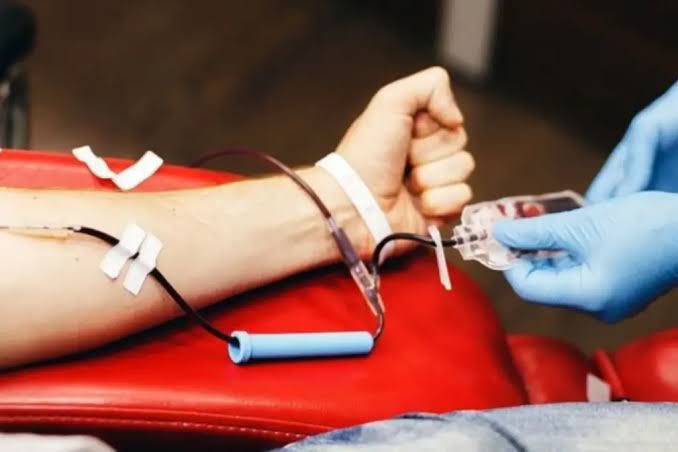
A significant doctrinal clarification by Jehovah’s Witnesses on blood transfusion practices is reshaping long-standing perceptions about the group’s stance on medical treatment, particularly in life-threatening situations.
The religious body has announced that members may now exercise personal choice regarding the use of their own blood during medical procedures, marking a nuanced shift that preserves core beliefs while accommodating evolving medical realities.
Jehovah’s Witnesses blood transfusion rules clarified as self-donation gains acceptance
The latest clarification on Jehovah’s Witnesses blood transfusion rules establishes that while adherents are still prohibited from receiving another person’s blood, they may now individually decide whether their own blood can be collected, stored, and reinfused during surgical or medical procedures.
The announcement was communicated through a video statement by Gerrit Lösch, who explained that the adjustment aims to provide believers with greater autonomy in navigating complex healthcare decisions.
According to him, the doctrinal foundation requiring Christians to abstain from blood remains unchanged. However, the scriptures do not explicitly address the medical use of a patient’s own blood, leaving room for personal discretion.
This distinction forms the basis of the updated guidance, allowing members to align their healthcare choices with both their faith and individual conscience.
Balancing doctrine with modern medical practice
The clarification reflects an ongoing effort by Jehovah’s Witnesses to reconcile religious teachings with advancements in medical science. For decades, the group has been known for rejecting blood transfusions, a position rooted in biblical interpretations that regard blood as sacred and symbolic of life.
Despite this, the organisation has consistently embraced alternative medical procedures that do not violate its doctrinal stance. These include techniques such as cell salvage, dialysis, and the use of heart-lung machines—methods that often involve circulating a patient’s own blood without introducing external sources.
With the updated Jehovah’s Witnesses blood transfusion rules, the scope of acceptable medical interventions has expanded further, particularly in cases where a patient’s blood may be temporarily stored and later reinfused.
Medical experts say this could improve clinical outcomes for adherents undergoing major surgeries, as it offers additional flexibility in managing blood loss while respecting religious boundaries.
Nigerian context and renewed public debate
The development has drawn renewed attention in Nigeria, where discussions around faith and medical ethics intensified following the death of social media personality Mensah Omolola, widely known as AuntieEsther.
Her decision to decline a medically recommended blood transfusion on religious grounds sparked widespread debate about the intersection of personal belief and medical advice. While her case highlighted the deeply personal nature of such decisions, it also exposed the broader challenges faced by patients, families, and healthcare providers.
The updated Jehovah’s Witnesses blood transfusion rules may influence similar situations going forward, as members now have clearer guidance on permissible medical options involving their own blood.
Health professionals in Nigeria note that the clarification could ease tensions in emergency care settings, where timely decisions are critical and ethical considerations often come into play.
Emphasis on personal responsibility
A central theme of the new directive is individual accountability. Rather than imposing a uniform rule, the Governing Body has placed the responsibility of decision-making on each member.
This approach underscores the importance of informed consent and personal conviction, particularly in medical scenarios that involve ethical complexity.
Members are encouraged to carefully evaluate their options, seek appropriate medical advice, and make decisions that align with their understanding of biblical principles.
Observers say this shift toward personal choice represents a subtle but meaningful evolution in how the organisation engages with contemporary issues, without undermining its foundational beliefs.
Historical roots of the doctrine
The prohibition on blood transfusions among Jehovah’s Witnesses dates back several decades and is derived from scriptural passages such as Genesis 9:4 and Acts 15:28–29, which instruct believers to abstain from blood.
These teachings have historically guided the group’s medical decisions, distinguishing them from other Christian denominations.
However, the organisation has repeatedly clarified that it does not oppose medical treatment in general. On the contrary, members are encouraged to seek professional healthcare, provided it aligns with their religious convictions.
The emphasis has always been on respecting the sanctity of life, which they believe is symbolised by blood.
Implications for healthcare systems
The updated Jehovah’s Witnesses blood transfusion rules are expected to have practical implications for healthcare providers, particularly in regions with significant populations of adherents.
Hospitals and medical practitioners may need to adapt consent procedures, ensuring that patients are fully informed about available options, including those involving autologous blood use.
In addition, the clarification could drive further innovation in bloodless medicine—a field that has gained traction globally due to its relevance not only for religious patients but also for broader clinical applications.
A shift without abandoning core beliefs
Ultimately, the new position reflects a careful balancing act. While maintaining its long-standing prohibition on donor blood transfusions, Jehovah’s Witnesses have introduced a degree of flexibility that acknowledges both medical advancements and individual conscience.
For many observers, this marks an important step in bridging the gap between faith-based principles and modern healthcare realities.
As the conversation around medical ethics continues to evolve, the updated Jehovah’s Witnesses blood transfusion rules are likely to remain a focal point in discussions about religious freedom, patient autonomy, and the future of healthcare decision-making.
About The Author
