

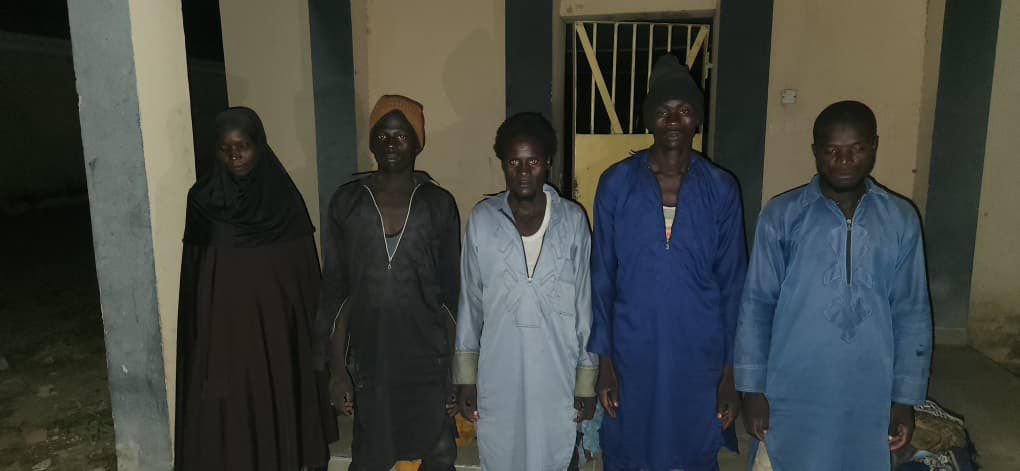
A JAS commander, three fighters and a woman have surrendered to Nigerian Army troops in Borno, with over 350 rounds of ammunition recovered.
A commander of the Jama’atu Ahlis Sunna Lidda’awati wal-Jihad (JAS), three other fighters and a woman have surrendered to Nigerian Army troops in Borno State, in another development coming amid intensified counter-insurgency operations in the North-East.
The five individuals reportedly laid down their arms in the Kumburi general area of Bama Local Government Area after coming from the Bula Daloye axis.
Their surrender took place at about 11:00 p.m. on Friday, August 21, 2026, according to a Special Situation Report from the military obtained by security analyst Zagazola Makama.
The operation involved troops of the 21 Special Armoured Brigade, which is operating under the Nigerian Army’s ongoing counter-terrorism missions, Operations HADIN KAI and DESERT SANITY V.
The group included a JAS commander identified as Ishiaku Agah. Three fighters, Sulieman Yaga, Iburija Chari and Ba’ana Modu, were also listed among those who surrendered.
A woman identified as Falmata Modu was the fifth person in the group.
The circumstances surrounding their decision to surrender came against a backdrop of continuing tensions and armed confrontations between rival JAS and Islamic State West Africa Province (ISWAP) elements in parts of Borno State.
The two terrorist factions have remained involved in a long-running struggle for influence, territory and control of resources in the North-East. Such internal disputes have at times resulted in clashes between fighters belonging to the rival groups.
Military operations have also continued to put pressure on terrorist networks in the region, with troops relying increasingly on intelligence-led activities to locate fighters, disrupt their movements and prevent them from strengthening their positions.
Following the surrender of the five individuals, troops recovered a substantial quantity of ammunition from the group.
The recovered items included 358 rounds of 7.62 x 54mm ammunition and three rounds of 7.62mm special ammunition.
The recovery of the ammunition is significant because it provides security personnel with additional material linked to the activities of the surrendered group.
The military is expected to examine the recovered items as part of its ongoing efforts to gather intelligence on terrorist operations in the area.
The surrendered individuals have since been taken into military custody along with the recovered ammunition.
They are expected to undergo further processing and questioning as the authorities continue to establish more details about their activities and possible links to other members of the terrorist network.
Information obtained from individuals who surrender can also assist security forces in understanding the movement of fighters and identifying areas where terrorist groups may still maintain a presence.
The Army has continued to combine military operations with intelligence gathering in its campaign against terrorist organisations operating in Borno and other parts of the North-East.
The latest surrender also comes at a time when security forces are maintaining pressure on terrorist groups through sustained operations in areas affected by insurgency.
According to the military situation report, troops have not relaxed their activities following the development. Security personnel are continuing to monitor the Kumburi general area and surrounding locations for possible movements by other fighters.
The surveillance is also intended to identify individuals who may be prepared to abandon terrorist activities and surrender to the authorities.
The military has repeatedly placed emphasis on weakening terrorist organisations by disrupting their operational structures and creating conditions that could encourage fighters to leave their groups.
The reported internal clashes between JAS and ISWAP have added another dimension to the security situation in the region.
While rivalries between the groups can result in violent confrontations, they can also undermine their ability to operate as cohesive organisations.
Continued pressure from security forces, combined with internal disagreements, could further affect the strength and support structures of the groups.
However, the military continues to treat the security situation with caution.
The Special Situation Report described the general security environment within the theatre as calm but unpredictable, indicating that troops remain alert despite the absence of any immediate major incident reported in the area.
The troops were also said to be maintaining satisfactory morale and fighting efficiency as operations continue.
The surrender of Ishiaku Agah and the four others represents another development in the military’s efforts to encourage members of terrorist groups to abandon their organisations.
For the Army, such incidents provide not only a reduction in the number of active fighters but also an opportunity to obtain information that could support future operations.
The recovery of more than 350 rounds of ammunition alongside the surrender further highlights the importance of the operation, particularly as troops continue to monitor the area for other fighters and weapons.
Security forces are expected to maintain their presence in the affected communities while sustaining intelligence-driven operations aimed at preventing terrorist elements from regrouping.
The military’s continued focus on intelligence, surveillance and targeted operations is part of broader efforts to restore lasting security to communities affected by insurgency in Borno State.
For now, the five surrendered individuals remain in military custody, while troops continue their activities across the theatre and keep watch for further developments.
Authorities have not indicated whether additional fighters have surrendered following the incident, but the military’s continued monitoring of the area suggests that efforts remain ongoing to identify and engage other members who may be willing to abandon terrorist activities.
The latest incident therefore adds to the continuing developments in the North-East, where military forces are seeking to exploit both operational pressure and divisions within terrorist groups to reduce their ability to threaten communities and sustain insurgent activities.
About The Author
