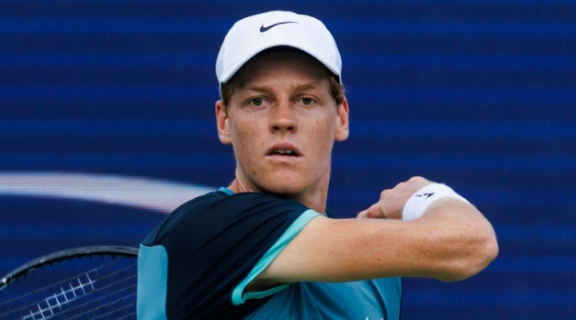
Jannik Sinner Qatar Open ambitions have taken centre stage as the Italian tennis star declared his determination to maximise his potential and finish his career without regret. Speaking in Doha, Sinner outlined a mindset built on consistency, perspective, and long-term ambition.
Competing at the Qatar Open, Sinner explained that success in tennis is not defined solely by trophies but by personal growth and sustained effort. The 24-year-old believes fulfilment comes from commitment rather than constant victory.
Sinner is eager to return to winning ways following his run at the Australian Open, where his campaign ended in the semi-finals. He was beaten by Novak Djokovic, a loss that tested his resolve.
Reflecting on that defeat, Sinner stressed that setbacks are an inevitable part of elite sport. He noted that every loss represents a moment to learn, rather than a reason to question his broader journey in professional tennis.
The Italian also revisited the heartbreak of the French Open final in 2025, where he lost a five-set thriller to Carlos Alcaraz. That match, he said, reinforced the fine margins at the highest level.
Rather than dwelling on disappointment, Sinner explained that such experiences strengthen his motivation. He believes painful losses shape champions, provided players respond with discipline and renewed focus rather than frustration.
At the Qatar Open, Sinner showed composure and authority in the second round, defeating Alexei Popyrin 6–3, 7–5. The victory underlined his readiness to reassert himself on the ATP Tour.
After the match, Sinner shared a thoughtful reflection on life as a professional athlete. “We live a normal life,” he said, highlighting the emotional balance required to navigate both success and adversity.
According to Sinner, tennis careers are defined by cycles of joy and disappointment. He described wins and losses alike as “episodes,” moments that pass quickly within the broader story of personal and professional development.
This philosophy has become central to the Jannik Sinner Qatar Open narrative, portraying a player grounded despite global attention. His calm outlook has earned respect from peers and analysts across the tennis world.
Sinner credited his support system for helping him maintain perspective. He repeatedly emphasised the importance of family, noting that their presence provides stability beyond the pressures of rankings and results.
He also praised his coaching team, describing them as instrumental in maintaining high standards. Their shared belief in “hard work” has, in Sinner’s words, been the foundation of his rise to the top of men’s tennis.
Statistically, Sinner’s career already places him among the sport’s elite. He has won 33 ATP titles, including four Grand Slams and five Masters 1000 trophies, achievements that underline his consistency.
These accomplishments have made him the most decorated Italian singles player of the Open Era. His success has elevated Italian tennis and inspired a new generation of players across Europe.
Sinner has also held the world number one ranking for a combined total of 66 weeks. That milestone confirmed his status as a dominant force in contemporary men’s tennis.
Despite these accolades, Sinner insists that complacency is not an option. He reiterated that tennis remains his top priority, a conscious choice that defines his daily routine and long-term planning.
“I do put tennis first,” Sinner said, making clear that his commitment remains absolute until he eventually steps away from competition. That clarity, he believes, removes distractions and sharpens focus.
The Jannik Sinner Qatar Open appearance is therefore more than just another tournament. It represents a continuation of a carefully managed career built on patience, resilience, and ambition.
Observers note that Sinner’s maturity sets him apart from many players of similar age. His ability to contextualise losses while maintaining hunger for improvement reflects a champion’s mindset.
As the season progresses, expectations will inevitably rise. Yet Sinner appears comfortable with that reality, viewing pressure as a privilege earned through consistent performance.
For fans, his comments in Doha offer reassurance that his best years may still lie ahead. Rather than chasing short-term validation, Sinner is clearly focused on longevity and legacy.
Read also: Victor Osimhen embraces new role at Galatasaray with four key assists
In an era defined by intense rivalry and physical demands, Sinner’s balanced outlook may prove decisive. His blend of ambition and perspective positions him as a leading figure in modern tennis.
Ultimately, the message from Doha is simple. Jannik Sinner Qatar Open is not just about titles, but about maximising potential, embracing the journey, and leaving the sport without regret.