

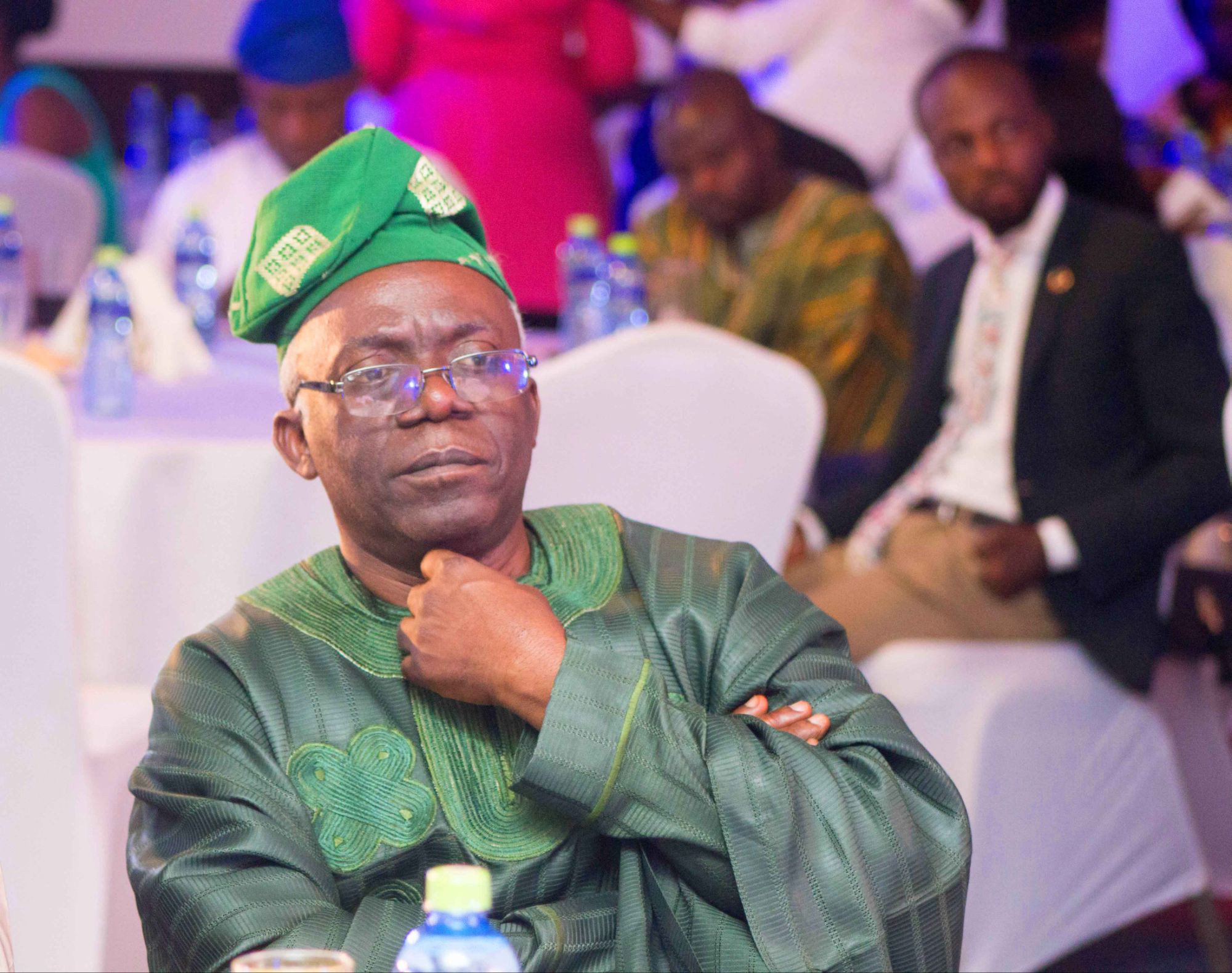
Human rights lawyer Femi Falana, SAN, has criticised the Federal Government’s reported decision to challenge a landmark judgment awarding £420 million to the families of 21 Nigerian coal miners killed by British colonial police in Enugu in 1949.
Falana urged President Bola Tinubu‘s administration to discontinue its appeal and instead concentrate on securing the payment of compensation ordered by the Enugu State High Court.
He argued that the Nigerian government should be at the forefront of efforts to obtain justice for the families rather than take legal steps that could complicate the enforcement of a judgment addressing one of the most painful incidents in the country’s colonial history.
The senior advocate also called for stronger diplomatic engagement with the United Kingdom, stressing that the Federal Government must use available channels to persuade the British authorities to comply with the court’s directives.
His intervention coincides with the 77th anniversary of the Iva Valley massacre, which took place on November 18, 1949, when colonial police officers shot dead 21 coal miners during an industrial protest in Enugu.
In a statement marking the anniversary, Falana expressed concern over the reported appeal filed by the Nigerian government, particularly as the British authorities had reportedly not challenged the judgment.
He maintained that the priority should be to ensure that the families obtain the financial compensation and formal recognition granted by the court.
The ruling at the centre of the controversy was delivered on February 5, 2026, by Justice Anthony Onovo of the Enugu State High Court.
It followed a lawsuit instituted in 2024 by human rights activist Mazi Greg Nwachukwu Onoh against the Secretary of State for Foreign, Commonwealth and Development Affairs and other defendants.
The case, registered as E/909/2024, sought to establish responsibility for the killings and obtain appropriate remedies for the families of the deceased workers.
After considering the matter, Justice Onovo held the British colonial administration responsible for the deaths, describing the shooting as an unlawful and extrajudicial violation of the miners’ right to life.
The court awarded £20 million to each of the 21 families, bringing the total compensation to £420 million.
It further imposed an annual interest rate of 10 per cent on the judgment debt until the entire amount is paid.
Apart from the financial award, the British government was directed to issue unconditional written apologies to the relatives of the deceased miners through their legal representatives.
The court specified that the apologies should appear in three Nigerian newspapers: Daily Sun, Daily Independent and The Punch. Three major newspapers in the United Kingdom were also to publish the apologies.
Justice Onovo directed that evidence of the publications be submitted before the court within 60 days, while the compensation was expected to be settled within 90 days of the judgment.
The ruling also placed responsibilities on the Nigerian government, faulting its failure over several decades to pursue adequate redress for the victims.
The judge referred to Sections 19(d) and 150(1) of the Constitution in addressing the responsibilities of the Federal Government and the Attorney-General of the Federation.
He directed the Nigerian authorities to begin diplomatic engagement with Britain within 60 days to pursue reparations, effective remedies and justice for the affected families.
Families renew demand for justice
The controversy surrounding the judgment has continued to attract attention, particularly among relatives of the miners who have waited for decades for official recognition and compensation.
As part of activities marking the 77th anniversary, family members of the victims reportedly organised a peaceful demonstration at the British High Commission in Abuja on Wednesday, November 18, 2026.
Carrying candles and memorial banners, the protesters called on the British government to respect the court’s decision and fulfil the obligations imposed by the judgment.
They maintained that the families should not continue to suffer delays after obtaining a favourable ruling from a Nigerian court.
The representatives of the victims have also questioned why the compensation and apology directives remain unfulfilled, especially given reports that the British government has neither appealed the judgment nor obtained a stay of execution.
Falana’s position has further intensified calls for the Tinubu administration to reconsider its legal approach and support the families in their pursuit of compensation.
How the 1949 massacre happened
The Iva Valley tragedy remains a significant chapter in Nigeria’s history of colonial exploitation, industrial relations and the struggle for independence.
Before the killings, Nigerian coal workers in Enugu had been expressing dissatisfaction with the conditions under which they operated.
Their grievances included poor working conditions, unequal remuneration, unpaid wages and discriminatory treatment under the British colonial administration.
At the time, coal mining was an important economic activity, providing energy and revenue for the colonial government. Despite the industry’s importance, Nigerian workers reportedly experienced considerable disadvantages in comparison with European employees.
Frustrated by the failure of their demands to receive adequate attention, the miners adopted a go-slow protest and occupied the mining facility.
Their action was also intended to prevent management from locking them out while negotiations over their grievances remained unresolved.
However, the confrontation took a deadly turn when colonial police opened fire on the workers.
Twenty-one miners lost their lives in the shooting, an incident that generated widespread outrage and strengthened opposition to British colonial policies.
The killings became an important reference point in Nigeria’s labour movement, highlighting the difficult conditions faced by indigenous workers and the unequal power relations that characterised the colonial economy.
The massacre also contributed to the growing nationalist agitation against British administration, as the deaths exposed the consequences of the authorities’ handling of workers’ demands.
Decades-long search for accountability
Although the killings occurred more than seven decades ago, the families have continued to seek recognition and justice for their relatives.
The lawsuit filed by Onoh in 2024 provided a fresh legal opportunity to revisit the incident and establish responsibility for the deaths.
The resulting February 2026 judgment granted substantial financial compensation, formal apologies and diplomatic intervention as remedies.
However, the reported appeal by the Federal Government has introduced fresh uncertainty into the process, prompting concerns about whether the families will receive the benefits of the ruling without further delays.
Falana insists that Nigeria should use its diplomatic influence to pursue compliance rather than undermine the judgment through its own legal challenge.
The dispute has once again raised questions about accountability for historical injustices and the responsibility of governments to protect the interests of citizens whose rights were violated under colonial rule.
For the relatives of the 21 miners, the struggle goes beyond the financial award. It represents a demand for recognition of their loved ones, acknowledgment of the circumstances surrounding their deaths and an end to decades of waiting for justice.
About The Author
