An Israeli air strike in southern Lebanon has reignited fears of renewed warfare, leaving four people dead and threatening the already fragile ceasefire between Israel and Hezbollah.
Lebanese authorities confirmed that the Israeli air strike targeted the town of Kfarsir in the Nabatieh district, wounding three others and heightening anxieties about the country’s spiraling Lebanon conflict.
Witnesses described panic as explosions tore through quiet neighborhoods, shattering glass and shaking distant homes. “It felt like the sky fell,” said a resident, visibly shaken.
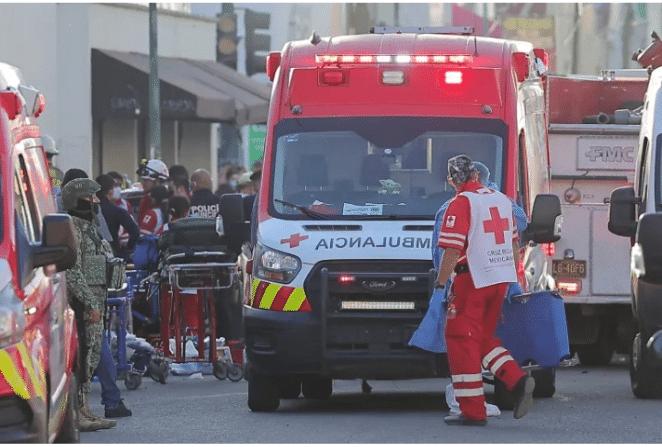
Lebanon’s Health Ministry said rescue teams worked through the night, pulling bodies from wreckage and rushing the wounded to nearby hospitals amid fears of more Israeli air strikes.
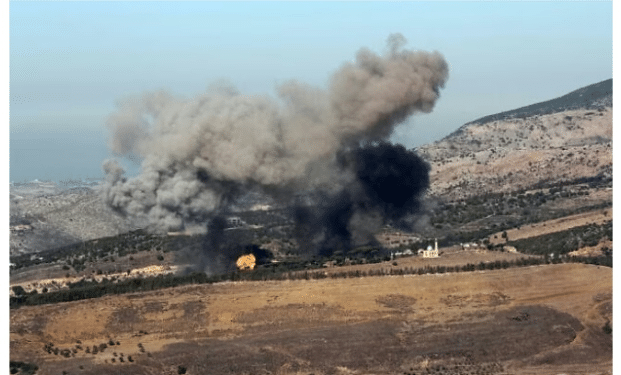
The strike, which local media said involved a guided missile, occurred around 2:15pm, prompting renewed condemnation from Lebanese leaders and warnings of escalating Hezbollah tensions.
President Joseph Aoun accused Israel of defying peace efforts, calling the attack “a deliberate provocation undermining dialogue.” His office vowed to raise the issue before international forums immediately.
Aoun’s statement followed his recent proposal to resume talks aimed at ending hostilities that have plagued southern Lebanon since the 2023 outbreak of the cross-border Lebanon conflict.

The fighting began when Hezbollah launched rockets in solidarity with Palestinians in Gaza, responding to the Hamas-led October 7 attacks that devastated Israeli towns near the border.
Although a fragile ceasefire was reached in November 2024, Israel has continued near-daily incursions, claiming its operations target Hezbollah infrastructure and deter militant activity across the frontier.
Analysts argue that repeated violations have eroded confidence in the truce. “Each Israeli air strike pushes both sides closer to the brink,” noted Beirut-based analyst Karim Darwish.
Since the ceasefire took effect, Israeli forces have reportedly killed more than 110 civilians in Lebanon, according to the United Nations, raising international concern over rising civilian casualties.
Locals in Kfarsir said Saturday’s strike left black smoke curling above the village. “We are tired of counting our dead,” lamented an aid worker, his voice trembling.
For many Lebanese, the Israeli air strike serves as another painful reminder of their country’s vulnerability. “We live under constant threat,” said schoolteacher Rana Khalil, clutching her child.
Israel’s government insisted the attack was a defensive measure, accusing Hezbollah of maintaining weapons depots and firing positions in residential zones, a claim Beirut has repeatedly denied.
Military officials said Israeli forces acted “in response to immediate threats” from hostile movements in southern Lebanon. They offered no evidence to support their claim, fueling public skepticism.
In a televised address, Aoun urged national unity, announcing he had instructed Lebanon’s army to “confront any Israeli incursions” and safeguard national sovereignty against repeated aggression.
Hours before the latest Israeli air strike, Israeli soldiers reportedly entered the border town of Blida, storming a municipal building and killing a night watchman asleep inside.
The victim, identified as 52-year-old Ibrahim Salameh, was described by villagers as a “gentle soul who never carried a weapon.” His death further strained the fragile ceasefire.
The Lebanon conflict has already displaced thousands of residents in the south, with many families living in temporary shelters as fields and homes lie in ruins from ongoing bombardments.
Human rights observers have documented widespread destruction across villages like Aitaroun, Houla, and Khiam, where farmers say they can no longer plant crops due to unexploded ordnance.
Despite U.S. and European appeals for restraint, both sides appear unwilling to yield. “Peace cannot survive when dialogue is drowned by bombs,” said peace advocate Leila Nasrallah.
In Israel, officials maintain that Hezbollah’s presence near the border violates the 2024 ceasefire terms and that their operations are intended to ensure security rather than provoke war.
However, Lebanese commentators argue that repeated Israeli air strikes have transformed defensive rhetoric into deliberate escalation, designed to pressure Beirut’s leadership into compliance.
Regional observers fear the conflict could spread. “The border is no longer just a line—it’s a fuse,” warned Middle East analyst Omar Saad, referencing rising Hezbollah tensions.
The Israeli air strike also came amid worsening economic despair in Lebanon, where inflation, political paralysis, and power shortages have crippled public institutions already weakened by years of crisis.
International organizations have urged restraint, warning that renewed warfare could plunge Lebanon into humanitarian catastrophe. “A single spark can reignite a regional blaze,” cautioned a UN spokesperson.
For civilians, survival has become the daily mission. “We have no electricity, no water, and now no peace,” said a displaced woman from Tyre sheltering in a school gymnasium.
Hezbollah’s leadership has so far avoided confirming involvement in the latest incident, but its media channels have vowed that “aggression will not go unanswered” if attacks persist.
Diplomatic sources in Beirut suggested that back-channel talks, facilitated by Qatar and France, remain ongoing to prevent a total breakdown of the fragile ceasefire.
But patience is wearing thin. “Every new Israeli air strike makes diplomacy harder,” said a senior Lebanese official anonymously. “How can we talk peace when our people are dying?”
Analysts note that both Israel and Hezbollah are balancing domestic pressures—Israel facing internal dissent, Hezbollah seeking to maintain its political relevance amid growing Lebanese fatigue.
The international community’s silence has drawn criticism. “Where are the voices demanding accountability for these civilian casualties?” asked humanitarian lawyer Rami Hatem, speaking to local media.
Across Lebanon, funerals for the four victims drew mourners from nearby towns, waving flags and chanting for justice. Priests and imams jointly called for “mercy and unity” in the face of grief.
At one burial, a grieving mother cried, “How many more before the world listens?” Her anguish echoed the collective despair of families trapped in a relentless cycle of loss.
Israeli officials have not commented further on whether the strike was coordinated with ongoing surveillance or a preemptive raid, deepening speculation about hidden military agendas.
As night fell on southern Lebanon, the thrum of drones overhead reignited terror. “You can’t sleep when you know death circles above,” said farmer Elias Mansour from Nabatieh.
Observers fear that unless international mediation succeeds, the Lebanon conflict could return to full-scale war, dismantling what little remains of the 2024 peace framework.
For now, both sides remain on high alert, trading accusations while civilians bear the brunt. The Israeli air strike has once again shown that peace in Lebanon remains painfully elusive.
About The Author