

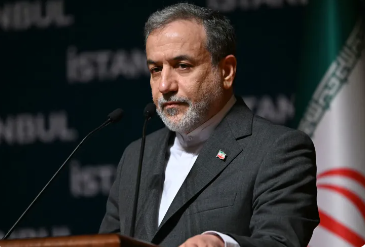
Iran’s Foreign Minister Abbas Araghchi has warned that if Israel is not held accountable for its attack on Iran, “the whole region and beyond will suffer”. The US-Israeli attacks on Iran’s nuclear facilities were “in stark violation of NPT [the Nuclear Non-Proliferation Treaty] and the UNSC Resolution 2231 that has endorsed Iran’s peaceful nuclear programme in 2015 by consensus,” Araghchi said in a speech at the BRICS summit in Brazil. He emphasized that the US’s involvement in the aggression by targeting Iran’s peaceful nuclear installations “has left no doubt as to the full complicity of the American government in Israel’s war of aggression against Iran”.
The BRICS+ nations, meeting in Rio de Janeiro, have condemned the recent Israeli and US air strikes that hit military, nuclear, and other targets in Iran. The 11-nation grouping stated that these attacks “constitute a violation of international law”.
The leaders further expressed serious concern over deliberate attacks on civilian infrastructure and peaceful nuclear facilities. This declaration marks a diplomatic victory for Tehran, which has received limited regional or global support after a 12-day bombing campaign by the Israeli military that culminated in US strikes on Iran’s nuclear facilities at Natanz, Fordow, and Isfahan.
The surprise attack by Israel on Iran’s military, nuclear, and civilian sites on June 13 resulted in at least 935 deaths and 5,332 injuries, according to the Iranian Health Ministry. Tehran launched retaliatory missile and drone strikes on Israel, killing at least 29 people and wounding more than 3,400.
A US-sponsored ceasefire took effect on June 24 and continues to hold. The conflict has had significant repercussions, including a substantial increase in deportations of Afghan refugees from Iran. Iran has ordered millions of Afghans to leave the country or face arrest, with over 700,000 already departed, including more than 230,000 in June alone.

Humanitarian groups have raised concerns about the potential destabilization of Afghanistan due to mass deportations. UNHCR official Arafat Jamal described chaotic scenes at the border, with Afghan families arriving in buses, confused, exhausted, and hungry. “They are coming in buses, and sometimes, five buses arrive at one time with families and others, and the people are let out of the bus, and they are simply bewildered, disoriented and tired and hungry as well,” Jamal said.
Many Afghans have lived in Iran for decades and consider it their home. Batoul Akbari, a restaurant owner in Tehran, expressed the sentiment of many Afghans, saying, “Being born in Iran gives us the feeling of having two homelands… Our parents are from Afghanistan, but this is what we’ve always known as home”.
About The Author
