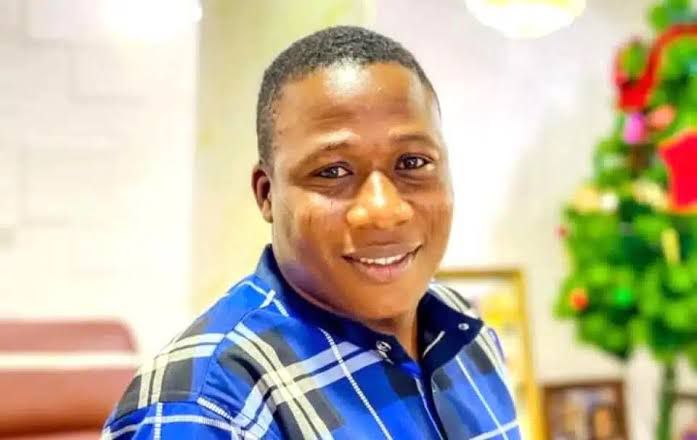
Igboho Set to Return to Nigeria After Being Removed From Watchlist
The long-standing saga surrounding Yoruba nation activist, Chief Sunday Adeyemo, popularly known as Sunday Igboho, may soon come to an end as his spokesperson, Olayomi Koiki, confirmed that all arrangements have been finalised for his return to Nigeria.
This development follows the removal of Igboho’s name from the federal government’s list of wanted persons, marking a pivotal moment in his years-long exile.
Koiki disclosed that the breakthrough came after a sustained intervention by prominent traditional rulers in the South-West region, who engaged President Bola Tinubu and appealed for the clearance of the activist.
Among the monarchs involved were the Olubadan of Ibadanland, Oba Rashidi Ladoja; the Ooni of Ife, Oba Adeyeye Ogunwusi; and the Olugbon of Orile Igbon, Oba Francis Alao, among others.
The spokesperson said, “Chief Sunday Adeyemo may return to the country at any moment. He has been fully cleared and will be reintegrated following the approval granted by the Presidency.”
The development is particularly significant as it signals a fresh chapter in the complex relationship between the federal government and Igboho, who fled Nigeria in July 2021 after his residence in Ibadan, Oyo State, was raided by a joint team of the Department of State Services (DSS) and the Nigerian Army.
The raid was carried out amid allegations of illegal arms possession and followed Igboho’s campaign against armed Fulani herdsmen in the South-West.
The operation resulted in the death of three of his aides and the arrest of 13 others, intensifying public interest in the case.
Igboho subsequently fled to the Benin Republic and was arrested at the Cotonou Airport on July 19, 2021, while attempting to travel to Germany. He was detained for more than a year before his release in March 2022.
Under former President Muhammadu Buhari’s administration, Igboho was declared wanted, denied a Nigerian passport, and had his bank accounts frozen despite court rulings in his favour.
The move sparked national debates and human rights discussions, with supporters arguing that the activist’s rights were being violated.
In 2025, Igboho visited the Olugbon Palace in Orile Igbon, Surulere Local Government Area of Oyo State, where he expressed frustration over his prolonged exile.
He appealed to President Tinubu to clear his name, a request that was also presented to the Olubadan of Ibadanland and other traditional rulers.
The announcement of Igboho’s clearance followed a recent visit by the Olubadan to President Tinubu at the Presidential Villa, Aso Rock, Abuja.
Koiki described the clearance as a historic moment, noting that it marks the end of a nearly five-year struggle and a victory for democracy and traditional institutions.
“This is a moment of joy for Ibadanland and the entire Yorubaland. Chief Adeyemo is no longer being sought by government authorities and is free to return home,” Koiki said.
The clearance also underscores the influence of traditional rulers in mediating political and security matters in Nigeria, particularly in the South-West.
The intervention by the monarchs reflects a coordinated effort to ensure peace and stability, especially given the sensitive nature of Igboho’s activism and its potential to influence regional politics.
Igboho has been a polarising figure in Nigerian politics. While some Nigerians view him as a defender of Yoruba rights and security, others see him as a controversial activist whose methods could threaten national cohesion.
His return, therefore, is expected to attract intense public attention and may also shape the narrative around regional autonomy and security in the South-West.
Koiki further revealed that Igboho has expressed deep appreciation to President Tinubu, South-West traditional rulers, and Yoruba sons and daughters across the world for their support throughout his years in exile.
The activist has been widely regarded as a symbol of Yoruba resistance, and his supporters have often used his case to highlight perceived injustices against the South-West region.
As the nation awaits his return, security agencies are expected to be on high alert, with stakeholders calling for calm and peaceful reintegration.
Analysts say Igboho’s return could trigger renewed debates on the legitimacy of self-determination movements and the role of civil activism in addressing security challenges.
The government has not yet issued an official statement regarding the specifics of Igboho’s clearance, including whether there will be any conditions attached to his return. However, the spokesperson’s confirmation has raised hopes that the activist will soon reunite with his supporters and family.
The case of Sunday Igboho remains a landmark in Nigeria’s recent political history, representing the clash between security operations, civil activism, and the authority of traditional institutions.
With the latest development, the nation may be witnessing a decisive end to one of its most enduring controversies.