

Vladyslav Heraskevych disqualified after banned war tribute helmet defiance at Winter Olympics, ending Ukraine’s medal hopes in skeleton at Milano Cortina 2026.
The 27-year-old Ukrainian athlete was barred from competing after he refused to remove a helmet featuring images of compatriots killed during Russia’s invasion.
The International Olympic Committee ruled the design breached Rule 50.2 of the Olympic Charter, which prohibits political demonstrations at Olympic venues.
Despite repeated warnings, Heraskevych insisted he would not replace the helmet with the black armband compromise offered by officials earlier this week.
His decision led the IOC to withdraw his accreditation, preventing him from starting his scheduled skeleton heats on Thursday morning in Italy.
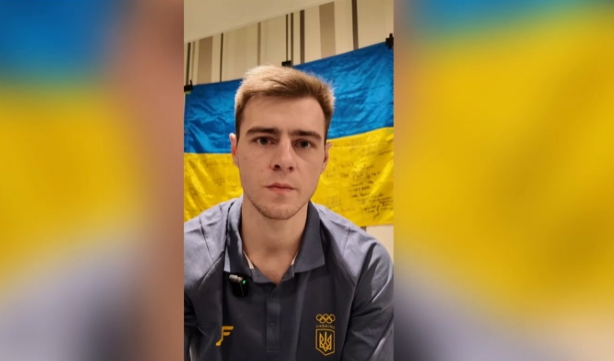
The controversy erupted days before competition, when Olympic officials informed the Ukrainian delegation that the helmet’s imagery violated Olympic neutrality rules.
Under Rule 50.2, athletes are forbidden from displaying political, religious or racial messages within Olympic sites, including competition tracks and medal ceremonies.
IOC representatives held multiple meetings with Heraskevych in an attempt to persuade him to comply with the regulation.
IOC President Kirsty Coventry personally intervened, urging him to reconsider and accept the armband alternative instead of the helmet tribute.
Heraskevych declined, saying honouring fallen Ukrainian athletes outweighed his lifelong ambition of winning an Olympic medal.
He described the helmet as a symbol of remembrance for sportsmen and sportswomen killed since Russia’s full-scale invasion four years ago.
“An Olympic medal would be huge,” he said earlier in the week. “But in time of full-scale war, some things are more important.”
He added that he would not “betray” those who sacrificed their lives, arguing that their memory mattered more than podium finishes.
The skeleton competitor had been considered a serious medal contender heading into the Milano Cortina 2026 Games.
His disqualification shocked members of the sliding community, many of whom expressed confusion over the severity of the sanction.
By withdrawing his accreditation entirely, the IOC required Heraskevych to leave the Olympic Village and competition venues immediately.
In its statement, the committee stressed that the issue was not the message itself, but the location in which it was displayed.
Officials maintained they sought a respectful compromise that would allow remembrance without breaching Olympic Charter provisions.
The proposed black armband was presented as a neutral form of tribute that complied with established Olympic protest guidelines.
However, Heraskevych maintained that removing the helmet images would dilute the meaning behind his protest.
On social media, he wrote: “This is the price of our dignity,” shortly after confirmation of his exclusion.
The banned war tribute helmet quickly became a flashpoint in broader debates over political expression at international sporting events.
Critics argue that strict enforcement of Rule 50.2 risks suppressing legitimate acts of remembrance during times of global conflict.
Supporters of the IOC insist consistent application of neutrality rules protects the Games from political escalation.
The Winter Olympics have historically maintained a stance of institutional neutrality, particularly during periods of geopolitical tension.
Yet the ongoing war in Ukraine continues to test those boundaries across multiple sporting federations and tournaments.
Russia’s invasion has reshaped international competition, leading to suspensions, flag restrictions and heated diplomatic disputes.
For Ukrainian athletes, participation itself often carries symbolic weight amid continuing violence in their homeland.
Heraskevych’s case underscores the emotional toll facing competitors balancing national grief with Olympic regulations.
British double Olympic champion Lizzy Yarnold described the decision as “quite shocking” during BBC commentary.
She suggested the IOC owed the Ukrainian athlete an apology and questioned whether the punishment was proportionate.
Yarnold emphasised that the helmet tribute represented memorialisation rather than overt political campaigning.
The Court of Arbitration for Sport may now become the next battleground, as Heraskevych indicated plans to appeal.
Any appeal would examine whether the IOC’s interpretation of Rule 50.2 was applied consistently and fairly.
Legal experts note that Olympic governance bodies traditionally enjoy broad discretion in accreditation matters.
However, appeals can hinge on procedural fairness and proportionality of disciplinary measures.
The Milano Cortina 2026 Games were intended to symbolise unity and resilience through winter sport excellence.
Instead, the Vladyslav Heraskevych disqualified decision has drawn renewed scrutiny toward Olympic protest policies.
Athlete activism has grown more visible in recent Olympic cycles, particularly around human rights and war.
The IOC has gradually adjusted guidelines but continues to prohibit demonstrations during competition and medal ceremonies.
Heraskevych’s defiance may influence future interpretations of what constitutes political symbolism in sport.
For now, Ukraine’s skeleton campaign proceeds without one of its strongest contenders on the ice track.
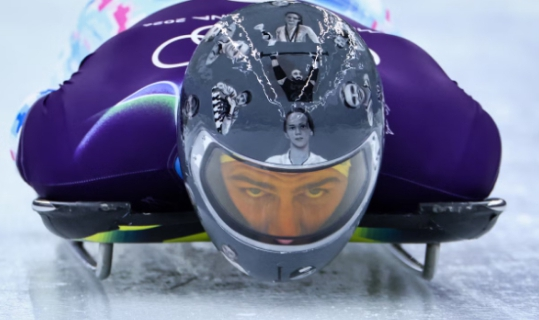
The broader question remains whether the Olympic Charter can fully separate sport from geopolitical realities.
As global conflicts persist, athletes increasingly confront moral choices that extend beyond competition timesheets.
The banned war tribute helmet controversy illustrates how remembrance, protest and regulation intersect on the world’s biggest sporting stage.
Ultimately, the episode highlights the tension between institutional neutrality and personal conviction.
Whether history views the IOC’s stance as principled or punitive may depend on future reforms to Olympic protest rules.
For Heraskevych, the cost of defiance was immediate and personal: the loss of his Olympic dream in Milano Cortina.
Yet for many observers, his stance transformed a skeleton race into a global conversation about memory, war and sporting conscience.
Read also: FA investigates Jim Ratcliffe immigration comments after ‘colonised’ remark
About The Author


