Hackers target Iranian state TV satellite to broadcast exiled crown prince in a dramatic cyber intrusion that stunned viewers and exposed deep vulnerabilities within Iran’s tightly controlled media infrastructure.
The unexpected broadcast briefly replaced regular programming with footage of Reza Pahlavi, the exiled crown prince, urging Iranians to resist repression and reclaim their future.
“This was not a random disruption, it was a calculated political message,” said a former Iranian broadcaster now living in Europe, describing widespread panic inside state media offices.
Iranian authorities confirmed an external interference but avoided naming those responsible, calling the act “psychological warfare orchestrated by hostile foreign elements.”
State television engineers reportedly struggled for hours to regain full control of transmission signals, revealing weaknesses in Iranian state media cyber security safeguards.
The cyberattack occurred amid escalating unrest inside Iran, where mass protests over economic collapse and political repression have rocked cities for weeks.
According to activists, the broadcast carried symbolic weight because state television remains one of the regime’s most tightly guarded tools of narrative control.
“When state TV is breached, it tells citizens the regime is not invincible,” said a digital rights researcher monitoring Iranian cyber operations.
Authorities accused opposition-linked hackers operating abroad, though no evidence was provided, and internet restrictions were intensified nationwide shortly after the incident.
The broadcast featured the exiled prince calling on security forces to “stand with the people,” a message officials described as incitement to sedition.
Hackers target Iranian state TV satellite to broadcast exiled crown prince at a time when the death toll from Iran protests has surpassed any unrest since 1979.
The U.S.-based Human Rights Activists News Agency reported at least 3,919 deaths, citing verified names gathered through an extensive internal activist network.
“The scale of killings is unprecedented in the Islamic Republic’s modern history,” said an agency spokesperson, warning the toll would likely rise further.
Iranian officials have refused to publish an official figure, instead blaming foreign governments for instigating violence and spreading what they call fabricated statistics.
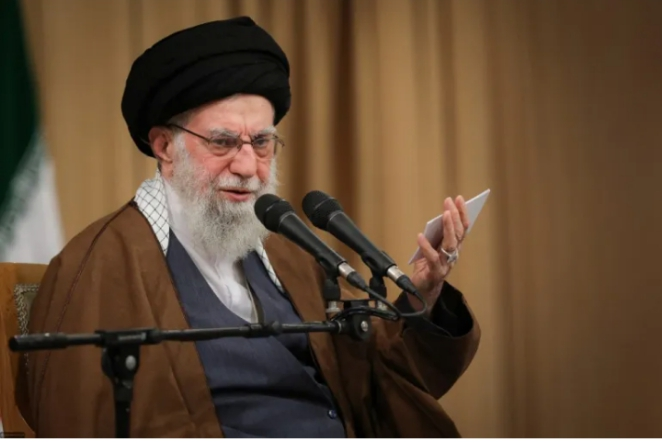
Supreme Leader Ayatollah Ali Khamenei acknowledged “several thousand” deaths, marking the first implicit admission of the crackdown’s severity by Iran’s leadership.
Observers note that the cyberattack’s timing appears designed to exploit growing public anger and international scrutiny of the government’s response.
“This was not just hacking, it was narrative warfare,” said a former intelligence analyst specializing in Middle East information operations.
The Iranian government responded by increasing satellite signal encryption and launching an internal investigation into transmission vulnerabilities.
Meanwhile, U.S. Navy carrier movement Taiwan Strait developments added further geopolitical tension to an already volatile regional landscape.
Tracking data showed the USS Abraham Lincoln transiting with three Arleigh Burke-class destroyers, raising speculation about broader strategic messaging.
American officials described the carrier’s movement as routine, though analysts say its presence carries symbolic deterrence value beyond operational necessity.
“The United States is signaling readiness across multiple theaters,” said a retired naval officer, linking the deployment to Middle East contingency planning.
Gulf Arab states remain opposed to any military strike on Iran, complicating Washington’s ability to respond decisively amid rising instability.
The absence of a carrier strike group in the Middle East until recently had limited operational options, according to multiple defense assessments.
Against this backdrop, cyber operations increasingly serve as tools for influence where conventional force remains politically constrained.
Experts say the Iranian state TV hack demonstrates how cyber protest tactics can bypass censorship and reach millions instantly.
“This changes the psychological balance,” said an Iranian sociologist, “because it shows dissent can penetrate even the most controlled spaces.”
Authorities restored normal broadcasting but tightened surveillance and warned citizens against sharing clips of the intrusion online.
Hackers target Iranian state TV satellite to broadcast exiled crown prince may ultimately be remembered as a turning point in Iran’s information war.
Whether the breach accelerates internal dissent or provokes harsher repression remains uncertain, but its symbolic impact is already undeniable.
About The Author