

Governor Sule cautions leaders against sycophancy, recalls Buhari’s experience, and honours Dokpesi’s fearless media legacy at NIPR Diamond Lecture in Abuja.
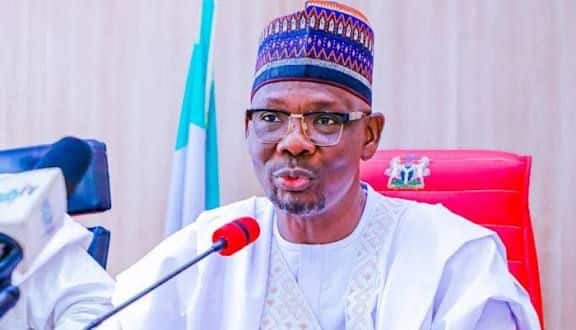
Governor Sule of Nasarawa State has delivered a bold message to Nigerian leaders, urging them to reject sycophancy and embrace honesty in governance.
Speaking during the 2nd Raymond Dokpesi Diamond Lecture organized by the Nigerian Institute of Public Relations (NIPR) in Abuja, Governor Sule said that flattery and blind loyalty were among the major factors that undermined the administration of former President Muhammadu Buhari.
Held at the Nigerian Army Conference Centre, Asokoro, the event brought together top politicians, communication scholars, and media executives.
It was also an opportunity to celebrate the legacy of the late Chief Raymond Dokpesi, the trailblazing founder of DAAR Communications, who revolutionized private broadcasting in Nigeria.
Addressing participants, Governor Sule spoke passionately about how sycophancy distorts truth and weakens good governance. He cited examples from his personal experience and from the Buhari administration to demonstrate how those who flatter leaders often betray them later.
“As a governor, I have seen what sycophancy can do,” Governor Sule stated. “Many people sat before President Muhammadu Buhari and called him the best president ever. But once he left office, these same people began to condemn him. That is the danger of sycophancy—it breeds hypocrisy.”
He stressed that leaders must surround themselves with people who speak truth to power rather than those who manipulate them with false praise.
According to the governor, sycophancy creates an illusion of success, isolating leaders from reality and making it difficult to address citizens’ needs effectively.
Reflecting on his journey in politics, Governor Sule recounted how his first attempt to contest the Nasarawa governorship in 2007 opened his eyes to the harsh realities of Nigeria’s political system. Having returned from the United States with high hopes, he was surprised by the transactional nature of local politics.
“At every political meeting, people would ask for money,” he recalled humorously. “I told them I had dollars, not naira, and they would reply, ‘That’s okay!’ It taught me that politics in Nigeria operates differently.”
After that experience, the governor returned to private life and continued working with the Dangote Group. Years later, former Governor Tanko Al-Makura encouraged him to rejoin politics and contest again in 2019.
Sule said he accepted the challenge after Al-Makura promised to handle all issues from his first experience—an assurance that was faithfully kept.
“I will forever be grateful to Al-Makura for his sincerity and encouragement,” the governor said, pledging not to allow political differences to destroy their friendship.
Governor Sule also shared insights into how he resolved the recurring farmer-herder clashes along the Nasarawa–Benue border.
Rather than inherit the animosity between his predecessor and former Benue Governor Samuel Ortom, he chose dialogue and peacebuilding.
“My father taught me never to inherit enemies,” he said.
“That is why I led a delegation of Nasarawa traditional rulers to visit Governor Ortom. Together, we addressed the causes of the conflict and found common ground.”
This approach, the governor noted, has helped reduce tensions between both states, proving that peace and collaboration are far more productive than hostility.
While honouring the late Chief Raymond Dokpesi, Governor Sule described him as a courageous media pioneer who challenged government monopoly during the military era. He said Dokpesi’s contributions to journalism and broadcasting transformed Nigeria’s media landscape forever.
“We are here to celebrate a legend,” the governor said. “Chief Raymond Dokpesi stood for truth and freedom of expression. Even in difficult times, he remained fearless and unwavering in his principles.”
Governor Sule encouraged young journalists to follow Dokpesi’s example of courage, innovation, and integrity in their professional pursuits.
The President of the Nigerian Institute of Public Relations, Dr. Ike Neliaku, praised Governor Sule for his visionary leadership and commitment to advancing public communication.
He noted the governor’s donation of land for the establishment of the Global Public Relations University in Nasarawa State—an institution expected to become a continental hub for training communicators and ethical leaders.
According to Dr. Neliaku, the project has reached an advanced stage and will play a key role in developing professionals who promote responsible communication, nation-building, and ethical governance.
Governor Sule reiterated that leadership should not be about praise or self-glorification but about service and truth.
“When leaders are surrounded by praise-singers, they lose the courage to face reality,” he warned.
“A good leader must have the humility to listen, the strength to act, and the integrity to serve.”
His remarks drew warm applause from the audience, many of whom described his speech as both reflective and inspiring.
By combining humility with candour, Governor Sule reminded Nigerians that leadership is not about power but about purpose—and that true service must always outlive personal ambition.
More news at ireport247news
About The Author


