

Nigeria is positioning itself more strategically within the evolving global economic and security architecture, as fresh diplomatic engagements signal a renewed push for deeper international partnerships.
EU Nigeria trade security partnership expands amid global uncertainty
The EU Nigeria trade security partnership is gaining renewed momentum following high-level talks between Nigerian authorities and the European Union, with both sides agreeing to strengthen cooperation across trade, investment, security, and critical minerals.
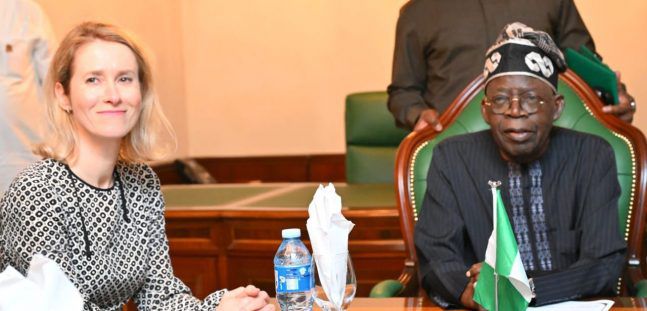
The development comes at a time of heightened geopolitical tensions and shifting global alliances, prompting countries to reassess economic and security relationships. During a recent meeting in Lagos, the EU’s foreign policy chief, Kaja Kallas, held discussions with Bola Ahmed Tinubu, outlining new pathways for collaboration between both parties.
Speaking after the engagement, Kallas described Nigeria and the EU as “like-minded partners,” stressing the importance of unity among nations that support a rules-based international system.
She noted that the evolving global security landscape has made it imperative for strategic partners to deepen cooperation in both economic and defence-related areas.
Central to the discussions was the expansion of the EU Nigeria trade security partnership, particularly in sectors considered critical to future economic growth. These include trade facilitation, foreign direct investment, cybersecurity, and the development of critical raw materials.
Nigeria’s vast deposits of strategic minerals such as lithium, cobalt, and rare earth elements have placed it firmly on the radar of global powers seeking to secure supply chains for advanced manufacturing and renewable energy technologies.
The EU, which has been actively diversifying its sourcing channels, views Nigeria as a viable long-term partner in this regard.
Analysts note that the growing importance of these minerals—used in electric vehicles, solar panels, and digital infrastructure—has intensified global competition, with major economies racing to secure reliable supply sources.
The EU Nigeria trade security partnership is therefore seen as a strategic move to align mutual interests in resource development and industrial growth.
Beyond minerals, trade and investment remain key pillars of the evolving relationship. Both sides are exploring opportunities to boost bilateral trade volumes, reduce barriers to market access, and encourage European investment in Nigeria’s key sectors, including infrastructure, energy, and technology.
For Nigeria, deeper engagement with the EU offers a pathway to attract capital inflows, enhance industrial capacity, and create jobs. It also aligns with the Federal Government’s broader economic diversification agenda aimed at reducing dependence on crude oil revenues.
Security cooperation was another critical area of focus during the talks. With global security challenges becoming increasingly complex—ranging from cyber threats to transnational crime—both Nigeria and the EU are seeking to strengthen intelligence sharing and capacity-building initiatives.
Kallas emphasised that cybersecurity is now a central component of international cooperation, noting that digital threats can have far-reaching implications for economic stability and national security. As such, the EU Nigeria trade security partnership will also prioritise collaboration in digital security frameworks and technological resilience.
President Tinubu, in his remarks, reaffirmed Nigeria’s commitment to deepening ties with the EU, expressing appreciation for the bloc’s continued support in various sectors. He highlighted the importance of sustained partnerships in driving economic growth and addressing shared challenges.
The meeting also included key members of Nigeria’s economic and security team, such as Nuhu Ribadu and Abubakar Atiku Bagudu, underscoring the strategic importance of the engagement.
Observers say the timing of the renewed partnership is significant. With global supply chains under strain and geopolitical tensions disrupting traditional trade routes, countries are increasingly prioritising alliances that offer both economic and security advantages.
For the EU, strengthening ties with Nigeria provides access to Africa’s largest economy and a gateway to the broader West African market. For Nigeria, the partnership presents an opportunity to leverage European expertise, technology, and financing to accelerate development.
However, experts caution that the success of the EU Nigeria trade security partnership will depend on effective implementation, policy consistency, and a conducive business environment.
Addressing issues such as regulatory bottlenecks, infrastructure deficits, and security concerns will be critical to unlocking the full potential of the collaboration.
There are also calls for Nigeria to ensure that engagements around critical minerals translate into local value addition rather than mere resource extraction.
Developing processing capabilities and enforcing transparent governance frameworks will be key to maximising benefits.
As global competition for resources intensifies, the evolving partnership between Nigeria and the EU signals a strategic alignment that could reshape trade flows, investment patterns, and security cooperation in the years ahead.
Ultimately, the expansion of the EU Nigeria trade security partnership reflects a broader shift in international relations—one driven by the need for resilience, diversification, and shared prosperity in an increasingly uncertain world.