

The Epping manhunt for Ethiopian national Hadush Kebatu has intensified, with the Metropolitan Police taking over the operation after the asylum seeker released in error vanished in London.
Authorities confirmed that Hadush Kebatu, who was serving a 12-month sentence for sexually assaulting a 14-year-old girl, was mistakenly released from HMP Chelmsford, triggering nationwide outrage.
Police officials say the Epping manhunt remains a “top priority” after CCTV showed Kebatu exiting a London-bound train at Stratford Station shortly after his mistaken release on Friday.
Commander James Conway of the Metropolitan Police said officers from the Specialist Crime Command are “working round the clock” in the Epping manhunt, describing the case as “deeply concerning.”
He explained: “We’ve confirmed Kebatu got off the train at Stratford. Our officers are reviewing CCTV across London and working with transport police to locate him.”

The Epping manhunt has now entered its second day, with the public urged to call emergency services immediately if they spot Hadush Kebatu or have any information about his whereabouts.
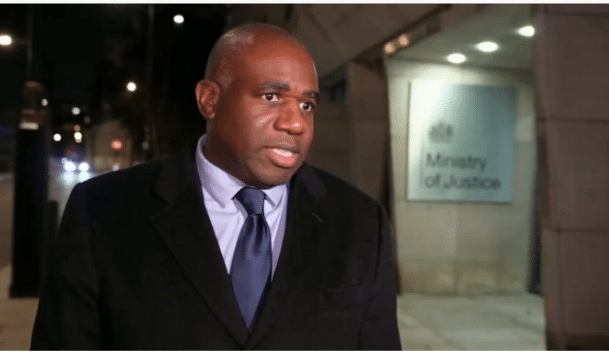
Deputy Prime Minister David Lammy said he was “livid and appalled” that a convicted sex offender and asylum seeker released in error could be “at large in London,” demanding immediate accountability.
“This represents an unacceptable failure within our justice system,” Lammy said. “The Epping manhunt should not have been necessary if procedures had been properly followed.”
The father of the teenage victim expressed anger and frustration, telling reporters that “the justice system has let us down,” adding he was devastated Kebatu had been freed mistakenly.
“I can’t believe this has happened,” he said outside HMP Chelmsford. “We trusted the system to protect our daughter, and it has completely failed us.”
Local outrage has surged, with residents of Epping calling for the government to strengthen border and prison oversight following the HMP Chelmsford prison blunder that set Kebatu free.
Epping Forest MP Neil Hudson said “the buck must stop at the top,” urging Prime Minister Keir Starmer and the Home Secretary to take direct responsibility for the situation.
“This is not merely an operational failure,” Hudson said. “It’s a moral one. The Epping manhunt should never have been needed if our systems had been competent.”
Meanwhile, Chelmsford’s Liberal Democrat MP Marie Goldman criticised the prison’s leadership, revealing she was “struggling not to call for the resignation” of Governor Mark Howard.
Goldman said: “There has been a total communication breakdown. The HMP Chelmsford prison blunder shows serious gaps in management and accountability that cannot be ignored any longer.”
The Metropolitan Police search expanded across London’s transport network, with officers examining footage from buses and stations near Stratford, Leyton, and Walthamstow in a citywide hunt.
Commander Conway said it was “vital the public understands the sensitivity of the operation,” explaining that the Epping manhunt involves collaboration between three major police forces.
Essex Police, the Metropolitan Police, and the British Transport Police are working jointly after initial enquiries indicated that Kebatu remained in the London area.
“This level of coordination shows the seriousness with which we’re treating this matter,” Conway noted. “We’ll not rest until Hadush Kebatu is back in custody.”
Union representatives have slammed the government, warning that the asylum seeker released in error incident reflects systemic failings across the overstretched UK prison system.
Aaron Stow, president of the Criminal Justice Workers’ Union, called Kebatu’s release “a profound failure of duty and a betrayal of victims and community trust.”
“The release of Hadush Kebatu is inexcusable,” Stow said. “We demand a full inquiry and reforms to ensure such a HMP Chelmsford prison blunder never occurs again.”
Mike Rolfe, the union’s general secretary, added: “The justice system is stretched to breaking point. Staff morale is low, resources are thin, and mistakes like this are inevitable.”
Official prison data revealed that 262 prisoners were released in error in England and Wales this year — the highest on record — amplifying pressure on the Ministry of Justice.
A government report confirmed that this represents a 128 per cent increase compared with last year, exposing the strain caused by staff shortages and overcrowded facilities.
The Epping manhunt has become symbolic of the broader debate over Britain’s asylum and prison policies, as critics say bureaucratic chaos now threatens public safety.
Councillor Chris Whitbread of Epping Forest District Council called the incident “shocking and unacceptable,” demanding “a full and transparent investigation” into the HMP Chelmsford prison blunder.
“My thoughts are with the victim’s family,” Whitbread said. “The Epping manhunt should never have been needed if justice had been carried out properly.”
He added: “Public safety must never be compromised. This is a serious failure of the justice system, and people are rightfully outraged.”
In Parliament, opposition lawmakers accused the government of “gross negligence,” saying the case exposed the lack of oversight in how offenders and deportees are processed.
Labour’s shadow minister for immigration policy said: “The asylum seeker released in error case reveals a government asleep at the wheel. Our institutions are simply overwhelmed.”
The timeline of events reveals a troubling pattern — from Kebatu’s arrival in the UK on a small boat in June to his conviction for multiple sexual assaults by September.
After crossing the Channel via Sudan, Libya, Italy, and France, Hadush Kebatu was housed at the Bell Hotel in Epping, which had become a controversial asylum site.
Anti-immigration demonstrations soon erupted in the area, with residents protesting against asylum accommodation policies and demanding stricter screening for arrivals like Kebatu.
By late summer, Hadush Kebatu was found guilty of assaulting a woman and a 14-year-old girl, and sentenced to 12 months imprisonment under a sexual harm prevention order.
However, instead of being transferred to an immigration detention centre for deportation, he was mistakenly released — a catastrophic administrative blunder that triggered the Epping manhunt.
Sources inside HMP Chelmsford admitted that staffing shortages and outdated tracking systems contributed to the error, with one officer describing the prison as “operating on fumes.”
An inspection report by HM Inspectorate of Prisons earlier this year had already warned that Chelmsford faced “considerable pressures” from a growing remand population and “insufficient resources.”
The report said 70 per cent of inmates were awaiting trial or sentencing, forcing overstretched staff to handle admissions, transfers, and releases under extreme time constraints.
Criminal justice analysts say the asylum seeker released in error case underlines how underfunding and poor management have left prisons vulnerable to “human errors with devastating results.”
Dr. Fiona Mellor, a criminologist at King’s College London, said: “The Epping manhunt shows what happens when a justice system is run on minimal resources and maximum pressure.”
Public confidence in Britain’s asylum management has now fallen sharply, with opinion polls showing rising frustration over security lapses and government inefficiency.
At the Bell Hotel in Epping, where Kebatu previously stayed, residents described fear and disbelief that a convicted sex offender once lodged in their community was now at large.
“This shouldn’t happen anywhere, least of all here,” said one local woman. “We’re living in fear while the Epping manhunt continues across London.”
Meanwhile, the Home Office faces mounting criticism for allowing prisons and immigration units to overlap responsibilities without clear lines of accountability or coordination.
An internal review, according to officials, will examine how the HMP Chelmsford prison blunder occurred and recommend immediate procedural and digital reforms.
Prime Minister Keir Starmer has promised a “swift, transparent investigation,” saying that “the Epping manhunt underscores why efficiency and public safety must be at the heart of reform.”
Police remain confident that Hadush Kebatu is still in the London area. Commander Conway reiterated: “We’ll find him. But it’s crucial the public remain vigilant and cooperative.”
Experts believe the case will accelerate plans for digital prisoner-tracking systems and a centralised release verification unit designed to prevent another asylum seeker released in error scandal.
As night fell on Saturday, officers were seen patrolling London’s Stratford and Hackney areas, where tips from commuters had led to fresh sightings related to the Epping manhunt.
Authorities say the search could extend nationwide if Kebatu manages to evade capture, though they remain optimistic that “his movements are still confined to East London.”
While the investigation unfolds, questions continue to mount about how such an avoidable error could occur — and what that means for the safety of British communities.
Until Hadush Kebatu is recaptured, the Epping manhunt remains a haunting symbol of how fragile public trust in the justice system has become amid mounting operational failures.
About The Author


