Electoral Bill 2025 introduces new timelines, stricter penalties, expanded technology use and campaign finance reforms aimed at improving Nigeria’s electoral integrity.
Nigeria’s proposed Electoral Bill 2025 represents a sweeping overhaul of the country’s election management framework, introducing tighter judicial timelines, stronger sanctions for violations, enhanced technological integration, and far-reaching reforms to political party operations.
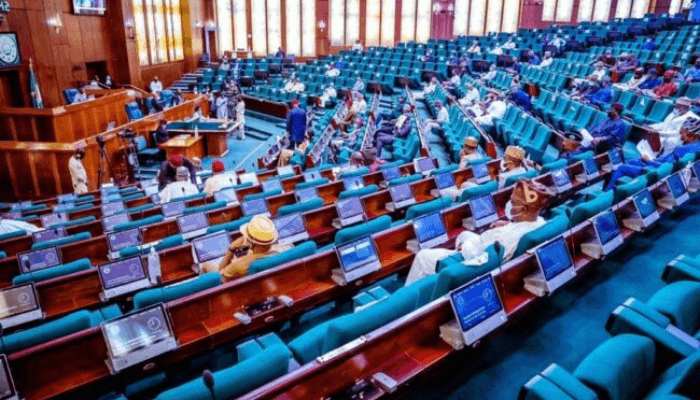
The bill, which seeks to repeal the Electoral Act 2022, is expected to come before the House of Representatives for legislative consideration.
A central feature of the Electoral Bill 2025 is the adjustment of timelines for election-related litigation.
Under the proposed framework, election petitions must be filed within 21 days of the official declaration of results.
Tribunals are required to deliver written judgments within 150 days of filing, a reduction from the previous 180-day window.
Appeals arising from tribunal decisions must also be submitted within 14 days.
Lawmakers say this change is designed to accelerate dispute resolution while maintaining procedural fairness.
Despite public calls for all election cases to be resolved before elected officials are sworn in, the bill retains the current structure that allows judicial processes to continue after inauguration.
According to the bill’s drafters, this approach balances political stability with access to justice.
To discourage abuse of the judicial system, the Electoral Bill 2025 introduces stiff penalties for frivolous petitions.
Where a court finds that an election challenge is based on grounds not recognised by law, it must impose fines of no less than ₦5 million on the legal counsel and ₦10 million on the petitioner.
This provision is intended to reduce politically motivated litigation and protect the courts from unnecessary congestion.
The bill also tightens eligibility enforcement for candidates. If a court determines that a candidate submitted false information in an affidavit relating to constitutional requirements, both the candidate and the sponsoring political party face disqualification.
Where such a ruling is delivered after the election has already been conducted, INEC is empowered to declare the candidate with the second-highest valid votes as winner, provided that candidate meets all legal requirements.
Candidates who knowingly contest elections despite being constitutionally unqualified are liable to a ₦5 million fine.
While the bill initially proposed additional penalties for sponsoring political parties, the House Committee disclosed that INEC advised against some clauses on the basis that they could violate the principle of double jeopardy.
On election preparation, the bill retains the statutory requirement for INEC to issue election notices at least 360 days before polling day.
However, it extends the deadline for submission of candidates’ lists from 180 to 210 days, a move INEC says will allow more time for verification and administrative processing ahead of general elections.
Withdrawal from elections is also more tightly regulated.
Candidates who choose to withdraw after nomination must submit a written notice and sworn affidavit to their political party, which must forward the documents to INEC not later than 90 days before election day.
This provision is aimed at reducing last-minute disruptions to ballot preparation.
In response to past controversies involving election officials, the bill strengthens oversight of Resident Electoral Commissioners (RECs).
While RECs remain presidential appointees subject to Senate approval for removal, the bill makes them directly accountable to INEC and grants the commission disciplinary authority over misconduct.
Technology plays a major role in the Electoral Bill 2025, particularly in voter accreditation and result management.
The bill formally legalises the use of the Bimodal Voter Accreditation System (BVAS) and other technological tools.
It mandates real-time electronic transmission of results from polling units to INEC’s Result Viewing Portal (IREV), to be conducted simultaneously with physical collation.
Where election results are disputed, collation officers are required to rely on original result sheets, BVAS data, accreditation records, and polling-unit vote totals to determine accuracy.
Any REC who wilfully refuses access to electoral materials commits an offence and faces a two-year prison sentence without the option of a fine.
The bill also introduces stricter regulations for political parties. Associations seeking registration must pay a ₦50 million administrative fee.
Party officials who submit false or misleading information face fines of ₦20 million for the association and ₦10 million each for the chairman and secretary.
To curb internal party disputes, political parties must submit their membership registers to INEC at least 30 days before primaries. Only registered members may vote or be voted for.
Failure to comply disqualifies the party from presenting candidates for that election. Courts are also restricted from entertaining cases related to internal party affairs, with heavy financial penalties imposed for violations.
Campaign finance rules are significantly revised under the Electoral Bill 2025.
Individual donations to candidates are increased from ₦50 million to ₦500 million, while spending limits for elective offices are raised.
Presidential candidates may now spend up to ₦10 billion, governors ₦3 billion, Senate candidates ₦500 million, and House of Representatives candidates ₦250 million.
Finally, the bill criminalises the unauthorised manufacture or importation of ballot boxes and voting devices, with offenders facing fines of up to ₦75 million or imprisonment for up to 10 years.
Petitioners alleging non-compliance with electoral procedures may also rely solely on documentary evidence where such documents clearly establish the claim.
If enacted, the Electoral Bill 2025 is expected to significantly reshape Nigeria’s electoral landscape by strengthening accountability, improving efficiency, and reinforcing public confidence in the democratic process.
Ireport247news