

Economic and Financial Crimes Commission quizzes El-Rufai amid protest drama in Abuja
Nigeria’s anti-corruption landscape took another dramatic turn on Monday as the Economic and Financial Crimes Commission (EFCC) questioned former Kaduna State governor Nasir El-Rufai over allegations of financial impropriety linked to his administration.
The interrogation followed days of political tension, including an aborted attempt by operatives to arrest the former governor at the Nnamdi Azikiwe International Airport last week
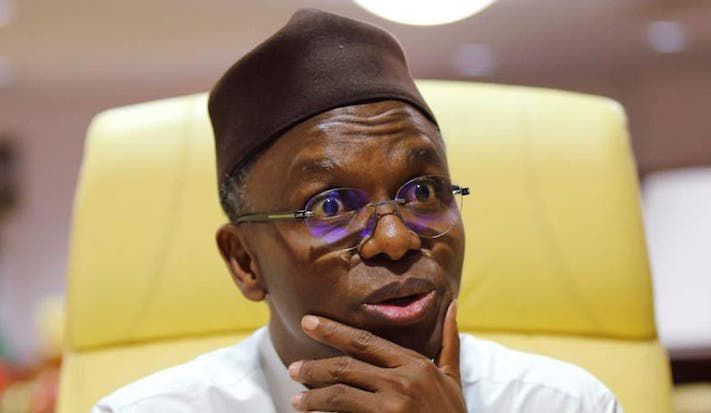
El-Rufai, who governed Kaduna State between 2015 and 2023 and is now a prominent figure in the African Democratic Congress (ADC), honoured the EFCC’s invitation after initially being out of the country when it was issued.
Probe centres on alleged fund mismanagement
Although the EFCC has yet to release full details of the allegations, sources familiar with the matter indicate that investigators are examining financial decisions and expenditure patterns spanning El-Rufai’s eight-year tenure.
The anti-graft agency has in recent months intensified scrutiny of former public office holders, reinforcing its mandate to pursue accountability irrespective of political affiliation.
El-Rufai’s legal team, led by counsel Ubong Akpan, confirmed that their client complied voluntarily with the invitation. The lawyer had earlier criticised the attempted airport arrest, arguing that proper procedural notice had not been observed and insisting on clarity regarding his client’s international passport.
By Monday afternoon, EFCC spokesperson Dele Oyewale confirmed that the former governor was being interrogated at the commission’s headquarters in Abuja, stressing that the process was ongoing and conducted within the bounds of the law.
Supporters and critics clash outside EFCC headquarters
The arrival of El-Rufai at the EFCC complex in Jabi transformed the anti-graft agency’s premises into a flashpoint. Two opposing groups converged on the location — one expressing solidarity with the former governor and another demanding an uncompromising investigation.
Supporters waved placards with inscriptions affirming their confidence in El-Rufai’s leadership record and calling for adherence to due process.
Meanwhile, a civil society coalition under the banner of the Mega National Movement for Good Governance assembled nearby, urging the EFCC to ensure transparency and resist political pressure.
Tensions escalated when some individuals who accompanied El-Rufai attempted to enter the EFCC facility despite repeated instructions that only the invited party would be granted access. Operatives eventually deployed tear gas to disperse the crowd after what officials described as persistent non-compliance.
Oyewale defended the action, stating that while peaceful protest is constitutionally protected, law enforcement agencies retain the authority to prevent obstruction of official duties. According to him, the dispersal was necessary to restore order and safeguard the integrity of the investigative process.
By evening, calm had reportedly returned to the area, and security presence was scaled down.
EFCC reiterates commitment to due process
The EFCC emphasised that the questioning of El-Rufai should not be interpreted as a conviction but rather as part of routine investigative procedures. Officials underscored that inviting former public office holders for interrogation is consistent with the commission’s statutory mandate to investigate allegations of financial crimes.
The agency also sought to counter narratives suggesting political targeting, maintaining that its operations are evidence-driven.
“No individual is above the law,” a senior official said, adding that cooperation with investigators often accelerates resolution of such matters.
Legal analysts note that high-profile interrogations often carry significant political undertones, particularly when they involve figures with national visibility. However, they argue that institutional credibility depends on demonstrable impartiality and procedural fairness.
Political ramifications loom
El-Rufai’s appearance before the EFCC comes at a politically sensitive period. As a leading voice within the African Democratic Congress, his legal challenges could reverberate within opposition circles and potentially influence coalition dynamics ahead of future electoral cycles.
Observers say the development may also test inter-party relations, especially if supporters frame the investigation as politically motivated.
Conversely, anti-corruption advocates view the probe as an opportunity to reinforce public confidence in oversight institutions.
For Kaduna State residents, the investigation rekindles debate about the fiscal legacy of El-Rufai’s administration. His tenure was marked by ambitious infrastructure projects and controversial policy reforms, including restructuring of the civil service and education sector interventions.
While supporters credit him with modernising urban infrastructure, critics have questioned aspects of debt accumulation and expenditure transparency.
Social media platforms were flooded with videos and commentary throughout the day, reflecting Nigeria’s deeply polarised political environment. Hashtags related to the Economic and Financial Crimes Commission and El-Rufai trended intermittently, amplifying both solidarity messages and calls for accountability.
Policy experts caution that how the EFCC manages communication around the case will be critical. Clear articulation of charges — if any are filed — and timely updates could mitigate speculation and preserve institutional trust.
At a broader level, the episode underscores the delicate balance between enforcing anti-corruption statutes and safeguarding civil liberties. The use of tear gas, though defended as proportionate crowd control, may invite scrutiny from human rights monitors assessing compliance with protest management protocols.
As of press time, El-Rufai remained in EFCC custody for questioning, though there was no official confirmation regarding detention beyond interrogation. Legal practitioners indicate that the next steps could include formal charges, administrative bail, or release pending further investigation, depending on findings.
The unfolding situation places renewed focus on Nigeria’s anti-corruption architecture. With public confidence in governance institutions often contingent on perceived fairness, the EFCC’s handling of the matter may shape narratives about accountability and political neutrality in the months ahead.
For now, the spotlight remains firmly on the commission’s headquarters in Abuja, where investigators continue to question one of Nigeria’s most prominent political figures — a development that signals both the reach and the scrutiny facing the nation’s anti-graft enforcement regime.


