

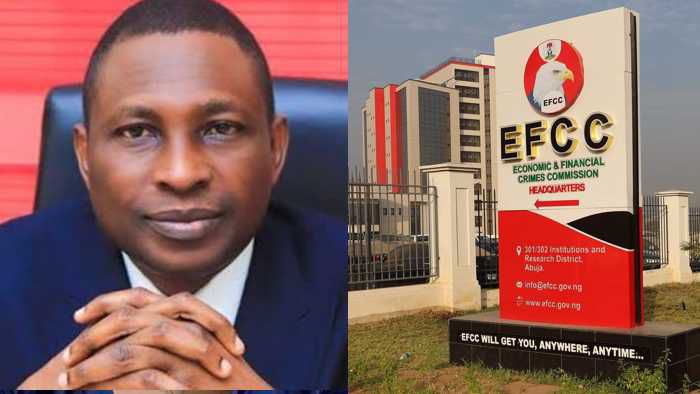
The Economic and Financial Crimes Commission (EFCC) has cautioned churches, mosques and other religious organisations against allowing funds contributed by worshippers to be diverted into private businesses.
EFCC Chairman, Ola Olukoyede, gave the warning on Wednesday, September 23, 2026, during the second council meeting of the Nigeria Inter-Religious Council (NIREC) held in Abuja.
Olukoyede said money received by religious organisations through tithes, offerings, zakat and other forms of donations should be properly separated from the personal finances of religious leaders.
He stressed that religious institutions needed stronger internal financial controls to ensure that funds entrusted to them were properly managed and applied to legitimate organisational purposes.
According to the EFCC chairman, religious leaders should be particularly careful about the way they handle money because their conduct can influence the behaviour and attitudes of the people who look up to them.
He explained that there was no restriction on religious leaders engaging in legitimate businesses or having other lawful sources of income.
However, he warned that personal business interests must not be financed with money belonging to a church, mosque or other religious body.
Olukoyede said the distinction between personal funds and organisational funds must remain clear, adding that failure to maintain such separation could amount to a criminal offence.
He said religious leaders should not assume control over money simply because they occupy influential positions within their organisations.
“When the followers know that there is no difference between the money that is meant to propagate the faith that you stand for and your own personal resources, you miss everything together,” he said.
The EFCC chairman added that religious leaders could pursue different legitimate occupations without compromising the financial integrity of the organisations they lead.
“You are not supposed to mingle in. That’s nothing that says you can’t do any other vocation. You sell cars, you are a farmer and all of that,” Olukoyede said.
He further advised religious leaders to ensure that money paid into the accounts or coffers of their organisations was not redirected to their private ventures.
“Don’t mix the money from the purse of your organisation with that of your own personal money. Don’t do that. When money is paid to your organisation, don’t divert it to your business,” he stated.
The EFCC chairman described such diversion as criminal and noted that members of religious communities were often aware of the financial practices of their leaders.
“That’s criminal and some of our adherents and followers see some of these things we do,” he added.
Olukoyede consequently called on churches and mosques to develop effective compliance and accountability structures that would provide greater oversight of their finances.
Such mechanisms, he said, would help religious organisations safeguard contributions from worshippers while also making it easier to identify and prevent financial misconduct.
He maintained that the fight against corruption should not be viewed solely as the responsibility of law enforcement agencies.
While the EFCC has the statutory responsibility to investigate financial crimes, conduct investigations and prosecute suspected offenders, Olukoyede said religious institutions could play an important preventive role by promoting honesty and responsible behaviour.
He described faith communities as having a unique position in society because of their ability to influence people’s values and attitudes.
According to him, religious teachings can contribute to the development of a culture where integrity is valued and dishonest enrichment is rejected.
He therefore urged religious leaders to ensure that their actions matched the principles they preach to their congregations.
The EFCC chairman also raised concerns about the practice of celebrating individuals whose sources of wealth may not be readily explained.
He particularly questioned situations in which people holding public office build expensive religious structures or make substantial donations despite having official earnings that appear inconsistent with the value of their assets.
Olukoyede warned religious leaders against becoming involved in the public celebration of wealth suspected to have been acquired through illegal means.
He illustrated the point with the example of a public servant who constructed a mosque allegedly worth far more than could reasonably be supported by the person’s legitimate earnings.
“A public servant says he has built a mosque that is worth more than his earnings in the next 500 years. And you go there to dedicate it. You are dedicating the proceeds of crime,” he said.
The statement underscored his call for religious institutions to exercise greater scrutiny when dealing with donations, projects and wealthy individuals.
Rather than automatically accepting or celebrating every contribution because it is made in the name of religion, Olukoyede urged faith leaders to pay attention to the legitimacy of the resources involved.
His comments also placed emphasis on the broader role of religious institutions in Nigeria’s anti-corruption efforts.
For the EFCC chairman, the fight against financial crimes requires more than investigations, arrests, prosecutions and recovery of assets. It also requires institutions capable of discouraging corrupt behaviour before it becomes entrenched.
Religious organisations, he said, are among the institutions that can influence this process because of the trust placed in their leaders and the large communities they command.
He therefore encouraged religious leaders to demonstrate transparency in the administration of donations and other funds while ensuring that their personal financial activities remain clearly separated from those of their organisations.
The NIREC meeting provided a platform for the discussion of issues involving religious institutions and their wider responsibilities in Nigerian society.
Olukoyede’s intervention focused on financial accountability, the prevention of corruption and the need for religious leaders to set standards of integrity through both their teachings and personal conduct.
He maintained that when religious institutions uphold proper financial practices and reject unexplained wealth, they can contribute meaningfully to efforts aimed at building a society where accountability and honesty are valued.