The Palestine Action hunger striker at the centre of a high-profile UK protest is facing a rapidly deteriorating health situation, according to medical warnings released on Saturday.
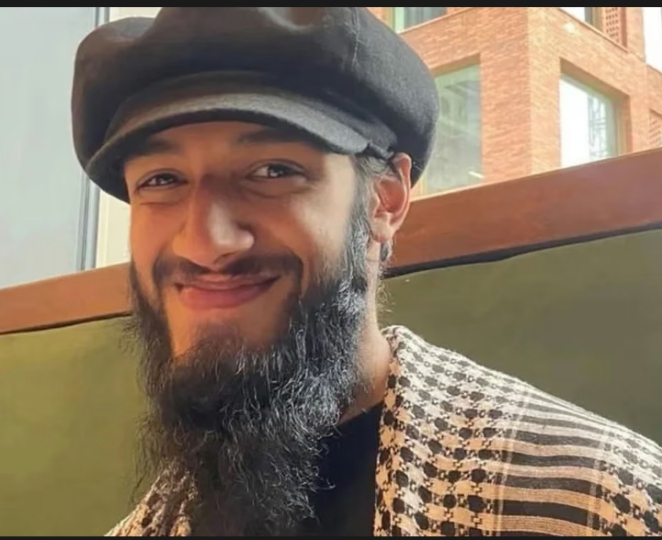
Umer Khalid, a 22-year-old activist, has reportedly stopped drinking water as well as food while continuing his protest against criminal charges linked to Palestine Action activities.
Medical professionals have warned that the decision to cease fluid intake places Khalid at immediate risk, with the possibility of death within days if no intervention occurs.
Khalid has been on hunger strike since November, briefly pausing during the Christmas period after becoming unwell before resuming the protest earlier this month.
The Palestine Action hunger striker is the last remaining protester still refusing nourishment, after seven others ended their strikes following recent government decisions.
The protesters were charged over alleged break-ins and criminal damage carried out in connection with Palestine Action demonstrations targeting Israeli-linked arms firms.
All defendants have denied the charges, arguing that the prosecutions represent a politically motivated attempt to suppress protest and activism in the UK.
Earlier this month, three remaining hunger strikers ended their protest after the government declined to award a £2bn military training contract to Elbit Systems UK.
Campaigners described the decision as a major breakthrough, saying it demonstrated growing official resistance to defence contracts linked to Israel.
Despite that development, Khalid chose to continue his strike, insisting that broader concerns about the UK legal system and political accountability remain unresolved.
The Palestine Action hunger striker has an underlying genetic condition, limb-girdle muscular dystrophy, which doctors say significantly increases medical risk.
The disorder causes progressive muscle weakness and makes prolonged fasting especially dangerous, even under close medical supervision.
Dr Rupa Marya, speaking on behalf of Prisoners for Palestine, warned that Khalid’s condition places him at heightened risk of rapid organ failure.
She explained that without fluid intake, the human body can deteriorate quickly, often within several days, particularly for individuals with pre-existing health issues.
Medical experts stress that dehydration alone can trigger severe complications, independent of the effects of prolonged food deprivation.
Dr Marya stated that Khalid’s continued protest highlights what she described as deep failures within the UK justice and political systems.
She argued that the case exposes contradictions in how protest is treated, particularly when activism challenges defence policy or foreign military relationships.
The UK protest hunger strike has drawn increasing attention from human rights advocates, legal observers, and campaign groups across Britain.
Supporters argue that Khalid’s actions are intended to force accountability rather than cause harm, framing the strike as a last resort protest.
Prisoners for Palestine said the government’s reversal on the Elbit Systems UK contract fulfilled a key demand of the hunger strikers.
The organisation noted that Elbit Systems subsidiaries have received multiple public contracts over the past decade, making the decision symbolically significant.
Campaigners say the Ministry of Defence’s move suggests a gradual shift in official thinking regarding military procurement and ethical scrutiny.
The Palestine Action hunger striker case has also reignited debate over protest policing and the criminalisation of direct action in the UK.
Critics argue that harsh legal responses risk escalating protests rather than resolving underlying political disagreements.
Among those who previously ended their hunger strike was Heba Muraisi, who reportedly reached 72 days without food.
That figure was widely noted by activists familiar with historical hunger strikes used as political protest in Britain and Ireland.
Human rights groups continue to call for dialogue and medical safeguards, urging authorities to prioritise life while legal processes continue.
As Khalid’s condition worsens, pressure is mounting on the UK government to respond before irreversible consequences occur.
The unfolding situation places renewed focus on how the state balances protest rights, public safety, and political dissent.
For supporters, the Palestine Action hunger striker has become a symbol of resistance against what they view as systemic injustice.
Read also: US immigration agents detain two-year-old Minnesota girl in late-night transfer despite judge’s order
For authorities, the case represents a complex legal challenge with serious ethical and humanitarian implications.
With medical warnings growing more urgent, the coming days may prove decisive for both Khalid’s health and the broader political debate surrounding his protest.
About The Author