Climate loans are increasingly being granted to countries like China and Saudi Arabia, revealing a widening gap in the distribution of funds meant to fight global heating worldwide.
An investigation into climate loans found just a fifth of the promised $100bn annually went to the world’s poorest 44 nations, highlighting systemic imbalances in global financing mechanisms.
Data from previously unreported UN submissions and OECD sources shows billions in public money are being allocated to climate projects, often influenced by political interests rather than necessity.
While the climate loans system functions broadly to transfer capital from wealthy polluters to vulnerable nations, lack of central oversight allows wealthier developing countries to secure disproportionate funding.
The Guardian and Carbon Brief analysis shows petrostates and China have received significant portions of climate loans, diverting attention from least developed countries struggling with debt and climate impacts.

Many LDCs rely heavily on loans rather than grants, with some receiving over two-thirds of their climate funding as debt, raising concerns about long-term financial sustainability.
Bangladesh and Angola are among countries receiving almost exclusively loan-based climate funding, a practice that can exacerbate existing debt crises while limiting investment in essential climate adaptation.
Developed countries provide climate loans bilaterally and through multilateral institutions, aiming to support clean energy and adaptation projects, though allocations often favor politically strategic or economically influential nations.
At the Copenhagen summit in 2009, developed nations pledged $100bn annually by 2020 to help vulnerable countries, yet the data indicates this promise has been partially diverted to wealthier developing nations.
Analysis of over 20,000 projects in 2021 and 2022 revealed that petrostates like UAE and Saudi Arabia received substantial climate loans, funding projects ranging from solar farms to electricity transmission infrastructure.
Japan provided UAE with more than $1bn in climate loans, including $625m for offshore electricity and $452m for a waste incinerator in Dubai, logged as climate finance.
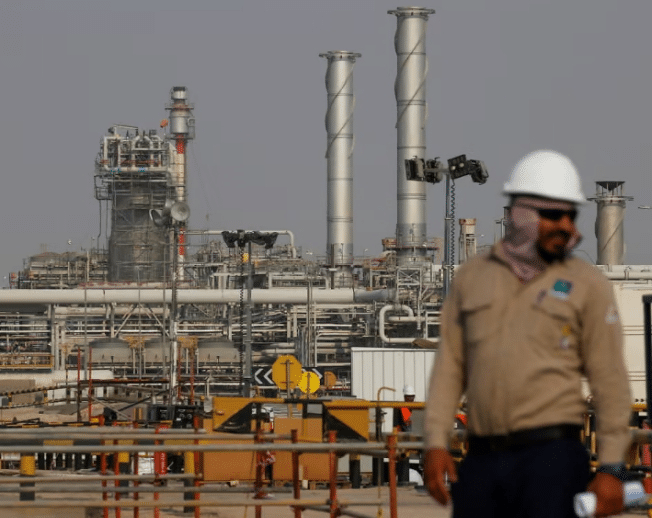
Saudi Arabia, among the world’s top carbon emitters, received $328m in Japanese loans, funding solar energy and electricity companies, demonstrating that major polluters are not excluded from climate funding.
Six Balkan countries hoping to join the EU obtained over $3.5bn in climate loans, with Serbia receiving ten times more per capita than the least developed countries, highlighting disparities in resource allocation.
European recipients also include Romania, which was granted $8m for a nuclear engineering study by the US, indicating that some projects prioritize technical expertise over direct climate adaptation or mitigation.
Experts stress that while climate loans are increasing, insufficient support reaches the poorest communities, leaving debt-distressed nations reliant on loans with potentially punitive conditions.
Joe Thwaites from the Natural Resources Defense Council called for greater grant-based funding, emphasizing that climate finance is a strategic investment addressing crises such as natural disasters, forced migration, and supply chain disruptions.
Over two years, LDCs received about $33bn, while developing countries collectively obtained $98bn, with India receiving $14bn and China $3bn, mostly from multilateral banks rather than bilateral loans.
China’s designation as a developing country remains controversial, as its per capita emissions surpass many European nations, while its access to climate loans reflects a growing tension in global negotiations.
The UN’s classification of countries has not evolved since 1992, allowing nations such as Singapore, Israel, Korea, and UAE to receive climate loans alongside LDCs, despite having far higher incomes and carbon footprints.
Ritu Bharadwaj of the International Institute for Environment and Development explains that even concessional loans increase financial burdens, as repayment conditions can favor the lender, creating structural inequities.
World Bank data shows LDCs have repaid $91.3bn in external debts over the same period, roughly three times the climate finance they received, illustrating the compounding effect of loans versus grants.
Debt repayments of the poorest nations have tripled in a decade, from $14.3bn in 2012 to $46.5bn in 2022, raising questions about whether climate loans merely recycle debt without delivering substantial adaptation benefits.
Finance experts argue that taking on new debt to repay old obligations may offer temporary liquidity but fails to address long-term climate vulnerability in LDCs, deepening financial instability.
UN Climate Change officials highlight the urgent need for reform, stressing that climate loans must be accessible, affordable, and fair to prevent the world’s lowest-income countries from relying on high-interest financing.
Plans are underway to replace the original $100bn target with $300bn annually by 2035, aiming for $1.3tn globally, with proposals including fossil fuel taxes and climate-resilient debt clauses to support vulnerable nations.
The inequities in climate loans distribution underscore the need for strategic reforms that prioritize grants, concessional lending, and equitable allocation to ensure meaningful adaptation and mitigation in LDCs.
Without structural changes, climate loans risk perpetuating global inequalities, funneling resources to wealthier or politically influential nations while the poorest communities remain underfunded and increasingly vulnerable.
Climate finance, when properly allocated, has the potential to address the root causes of crises worldwide, but current trends reveal a misalignment between funding priorities and actual vulnerability.
About The Author