The Burnham tax warning has ignited intense debate across Britain after economists cautioned that Prime Minister Andy Burnham’s ambitious spending commitments may ultimately require higher taxes or significant public spending reductions nationwide.
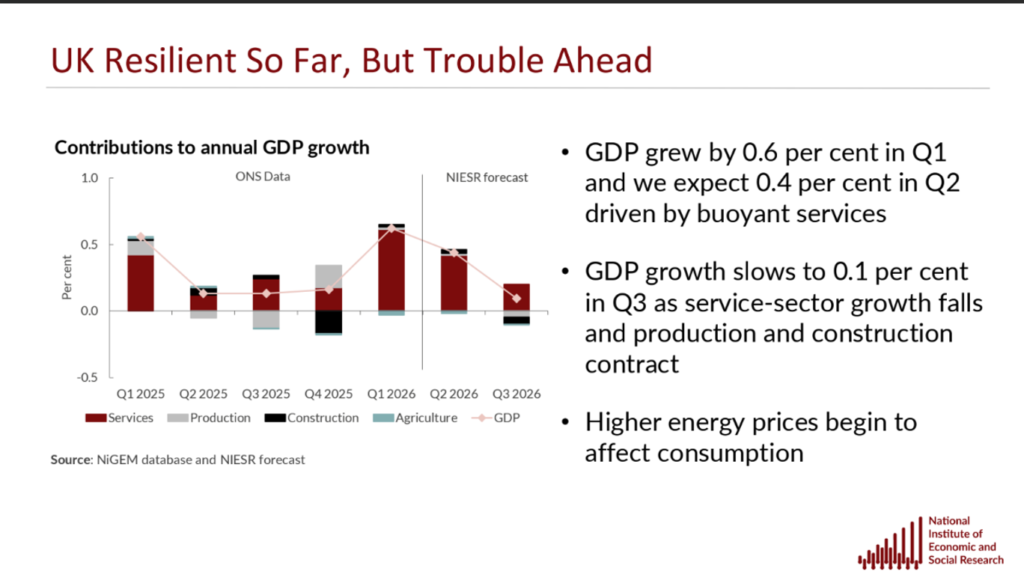
Britain’s economic outlook has become increasingly challenging despite stronger-than-expected growth during the first half of 2026. Economists say rising inflation, slowing growth and mounting borrowing costs are rapidly limiting government financial flexibility.
The latest assessment comes from the National Institute for Economic and Social Research, which believes the government has exhausted its capacity for additional borrowing without exposing Britain’s economy to greater financial instability and uncertainty.
Prime Minister Burnham recently unveiled several flagship policies, including a nationwide £2 bus fare cap, lower VAT on household energy bills and a 20 percent reduction in pub business rates across England.
Those measures are estimated to cost around £2 billion, prompting widespread questions over how the government intends to finance its expanding list of priorities without worsening Britain’s already stretched public finances and debt.
David Aikman, Director of the National Institute for Economic and Social Research, acknowledged the difficult fiscal situation, saying, “It’s a tough, tough job being chancellor and I wouldn’t wish it on anyone.”
His remarks reflected growing concern among economists that Britain’s next budget will require painful compromises. The government faces increasing pressure to balance public expectations with economic realities and limited fiscal flexibility available.
According to the institute’s latest projections, inflation could climb to 3.8 percent during 2027, exceeding earlier forecasts and placing renewed pressure on household budgets already struggling with elevated energy and everyday living costs.
Should inflation continue accelerating, the Bank of England may have little choice but to increase interest rates again. Such action would raise borrowing costs for homeowners, businesses and consumers across the country.
Economic growth is also expected to lose momentum. After expanding by 0.6 percent during the first quarter and 0.4 percent during the second, growth could slow dramatically to just 0.1 percent.

Aikman issued an even stronger fiscal warning, declaring, “Borrowing is at capacity so spending commitments will have to be found through tax rises or spending cuts.” That assessment has intensified political debate nationwide.
Besides recently announced policies, the government must also identify billions needed to strengthen defence spending, reform social care services and support programmes designed to reduce homelessness throughout Britain over the coming years.
Economists believe these additional commitments significantly complicate the government’s financial position. With borrowing costs already among the highest within the G7, every new spending pledge creates increasingly difficult budgetary trade-offs for ministers.
The report also highlights growing risks from international events. Ongoing conflict in Ukraine and instability across the Middle East continue affecting global energy prices, investment confidence and overall economic stability throughout Europe.
Higher fuel prices linked to geopolitical tensions have increased household expenses and weakened purchasing power. Businesses are also facing higher operating costs, making future investment decisions considerably more challenging than previously anticipated.
Despite these concerns, researchers acknowledged Britain’s economy showed surprising resilience during the first half of 2026. However, they believe that strength will gradually weaken as inflation continues eroding consumer spending and business confidence.
Stephen Millard, Deputy Director for Macroeconomics, explained, “The UK economy proved to be surprisingly resilient in the first half of this year, but a slowdown is still to come.”
Millard added that even if international tensions ease relatively quickly, inflationary pressures are expected to persist. Consequently, ministers must carefully decide how to finance recent policy announcements without relying on additional borrowing.

The report further projects unemployment could rise modestly before stabilising later in the decade. Meanwhile, disposable household income growth is expected to weaken considerably as inflation continues reducing real consumer purchasing power.
Researchers also warned that youth unemployment remains a major challenge. More than one million young Britons could remain outside education, employment or training through 2030 unless targeted local interventions achieve meaningful long-term success.
The Burnham tax warning therefore represents far more than a political dispute. It highlights difficult economic choices facing Britain as ministers attempt to protect living standards while maintaining fiscal discipline and restoring long-term confidence.
Read also:Japan earthquake traps shoppers as massive rescue begins
With the next Budget approaching, pressure is mounting on Prime Minister Andy Burnham and Chancellor John Healey to demonstrate how new promises will be funded. Economists insist difficult choices can no longer be postponed.