

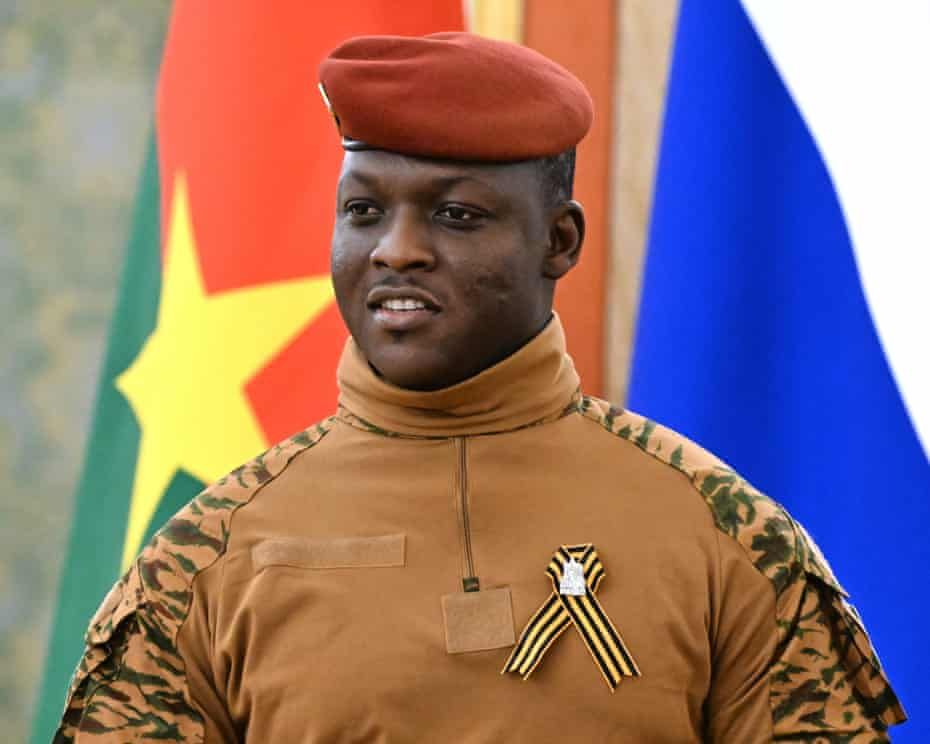
“Burkina Faso democracy rejection” has intensified political debate after Ibrahim Traoré declared that democratic governance is unsuitable for the country, urging citizens to abandon expectations of elections entirely.
The military ruler, who seized power during the Burkina Faso coup of September 2022, reinforced his stance during a state broadcast, dismissing democratic systems as incompatible with national realities and security priorities.
Traoré argued that democracy has historically enabled violence globally, claiming it leads to instability, civilian casualties, and institutional breakdowns, framing his rejection as a necessary step toward national protection and sovereignty.
Since taking control, Traoré has gradually tightened authority, banning political parties and postponing elections originally scheduled for 2024, later extending his administration’s rule until 2029 amid ongoing instability concerns.
The “Burkina Faso democracy rejection” narrative is increasingly tied to the country’s prolonged battle against insurgency, particularly from groups linked to Jama’at Nusrat al-Islam wal-Muslimin operating across the Sahel region.
Violence has escalated significantly, with thousands killed and millions displaced, creating a humanitarian crisis that continues to undermine governance structures and complicate any transition toward civilian-led political systems.
Human rights organisations, including Human Rights Watch, have accused both government forces and armed groups of committing serious violations, including targeted killings and forced displacement of vulnerable communities.
Reports allege that security operations have disproportionately affected Fulani populations, raising concerns about ethnic targeting, although authorities have consistently denied accusations of systematic abuses or crimes against humanity.
Traoré’s rhetoric has gained traction among segments of African youth, particularly due to his strong anti-Western messaging and references to revolutionary icon Thomas Sankara, who remains influential in regional political thought.
However, critics argue that rejecting democratic frameworks risks entrenching authoritarian governance, limiting accountability, and weakening institutional development necessary for long-term political and economic stability within Burkina Faso.
The international community remains cautious, monitoring developments closely as governance shifts continue, especially given the broader implications for democratic norms and security cooperation across West Africa’s fragile political landscape.
As the “Burkina Faso democracy rejection” stance dominates discourse, questions persist over whether prioritising security over democratic processes will deliver stability or deepen the nation’s ongoing political and humanitarian challenges.
Read also:Macron criticises Trump over NATO, Iran mixed messages
Regional analysts warn that the “Burkina Faso democracy rejection” stance could influence neighboring Sahel nations facing similar insurgency pressures, potentially encouraging military-led governance models over civilian democratic transitions.
Economic implications are also emerging, as prolonged political uncertainty risks discouraging foreign investment, weakening regional trade partnerships, and placing additional strain on an already fragile national economy.
Despite official assurances of stability, citizens continue to face daily security challenges, and the long-term success of the “Burkina Faso democracy rejection” approach will likely depend on measurable improvements in safety and governance outcomes.
About The Author
