

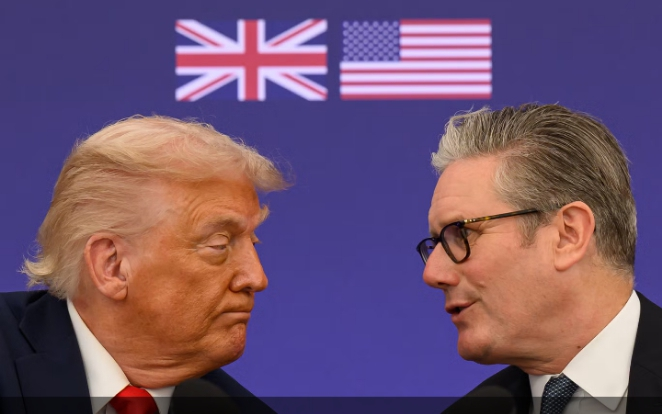
Britain needs new defence pact with Europe as anxiety grows among voters that the United States may abandon its traditional security role under Donald Trump.
Polling conducted for The Independent reveals widespread concern that Washington might not support Britain if Russia launches a direct military attack.
The findings highlight growing unease about America’s shifting foreign policy priorities following Trump’s return to the White House last year.
More than half of British voters now support forming a European-led defence alliance that would operate independently of the United States.
According to the JL Partners survey, fifty-five percent favour a UK-Europe defence pact without American involvement.
Only eleven percent of respondents opposed the idea, while the remainder were undecided about such a dramatic policy shift.
Britain needs new defence pact with Europe because faith in Nato’s long-standing security guarantees appears to be weakening among the electorate.
Nato has been the cornerstone of European defence since 1949, built on collective protection between Europe and the United States.
At the heart of the alliance lies Article Five, which treats an attack on one member as an attack on all.
That commitment, however, relies heavily on the military strength and political will of the United States.
Trump’s repeated criticism of European defence spending has fuelled doubts about America’s willingness to honour Nato obligations.
The US president has previously labelled European nations “weak” and accused them of failing to contribute enough to collective security.
He has also threatened to withhold military support from Nato allies that do not meet defence spending targets.
Such rhetoric has unsettled European capitals, particularly amid Russia’s ongoing war in Ukraine.
Many voters now question whether Trump would prioritise American interests over defending Britain during a serious international crisis.
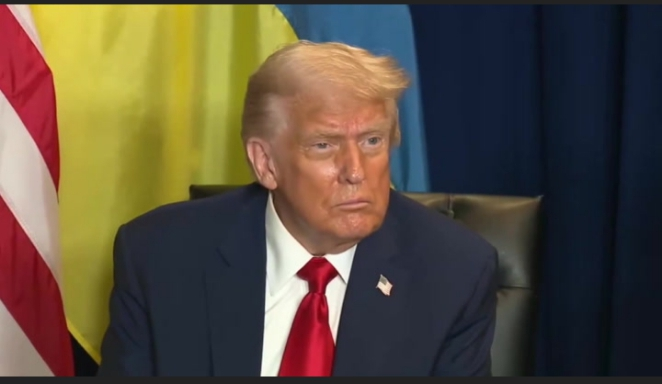
The survey reflects a broader shift in public attitudes towards Britain’s traditional “special relationship” with the United States.
Despite reports that Trump and Prime Minister Keir Starmer maintain cordial personal relations, trust in US reliability is declining.
Britain needs new defence pact with Europe as voters reassess long-held assumptions about American protection.
Concerns are further heightened by Russia’s increasingly aggressive military posture across Europe.
Russian fighter jets and drones have repeatedly violated European airspace, including near Nato member states.
Moscow has also been accused of conducting cyber attacks, sabotage operations, and covert influence campaigns across the continent.
Senior European officials warn these actions signal preparations for a broader confrontation beyond Ukraine.
Nato Secretary General Mark Rutte recently urged member states to prepare for warfare on a scale unseen for generations.
His comments echoed warnings from Britain’s new MI6 chief, Blaise Metreweli, about Russia testing Western defences in “grey zone” operations.
UK Defence Minister Al Carns similarly cautioned that the “shadow of war” is now looming over Europe.
These warnings reinforce public fears that Russia could target Baltic states or other Nato members next.
Read also: Man charged with murder after devoted grandfather dies following Christmas pub assault in Leicestershire
Britain needs new defence pact with Europe to reduce reliance on unpredictable external allies during escalating security threats.
European nations have already begun increasing defence spending and enhancing military cooperation.
Initiatives such as the UK-led Joint Expeditionary Force coordinate defence efforts in northern Europe and the Arctic region.
However, analysts warn Europe remains years away from achieving full military independence from the United States.
American firepower, intelligence capabilities, and logistical support remain critical to Nato’s effectiveness.
Trump’s approach to the Ukraine war has also alarmed many European observers.
Although he has proposed offering Ukraine limited security guarantees after a ceasefire, critics say they fall short.
Trump has resisted extending full Nato-style protections, raising questions about deterrence credibility.
Notably, Nato’s Article Five has been invoked only once, following the September 11 attacks against the United States.
This historical fact underscores European reliance on American commitment rather than reciprocal defence experiences.
James Johnson, co-founder of JL Partners, said voters have lost faith in automatic US intervention.
He explained that Trump’s radical foreign policy shift has significantly altered public perceptions of global security.
Many respondents believe Europe must now take control of its own military destiny.
Britain needs new defence pact with Europe as voters seek stronger regional cooperation to safeguard national security.
The poll surveyed 1,562 adults across Britain in mid-December, capturing growing unease ahead of 2026.
Its findings suggest future governments may face pressure to rethink defence alliances fundamentally.
Any move away from Nato would represent a historic transformation in British foreign policy.
Diplomats caution that abandoning US-backed defence frameworks carries risks as well as strategic opportunities.
Nevertheless, public opinion increasingly favours European solidarity over dependence on Washington.
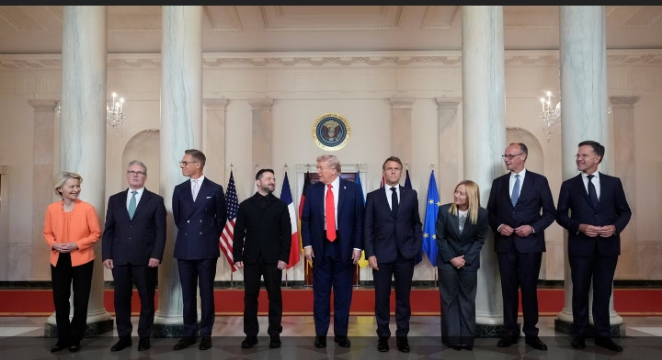
As geopolitical uncertainty deepens, Britain’s security debate is entering uncharted territory.
Whether political leaders act on these concerns may shape Europe’s defence architecture for decades.
About The Author
