

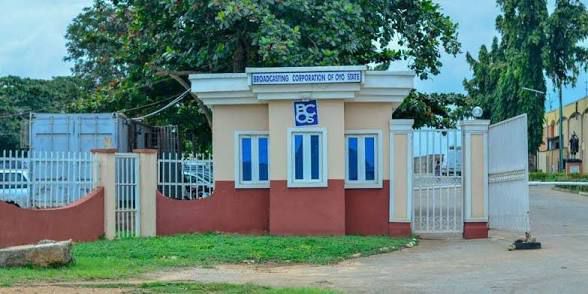
These questions become even more important because workers and unions have recently raised concerns over delayed salaries, outstanding allowances and other welfare issues at BCOS.
The financial situation of the Broadcasting Corporation of Oyo State (BCOS) deserves urgent public scrutiny.
BCOS is not an ordinary private business. It is a public institution established to provide radio and television services, disseminate news and information, promote education and public entertainment, and serve the people of Oyo State.
Yet, despite the corporation’s significant revenue-generating capacity and government support, serious questions continue to surround its financial situation.
The numbers raise serious questions
Based on the cleaned IGR figures for the first seven months of 2026, BCOS generated approximately:
- January — ₦60,000,000
- February — ₦44,000,000
- March — ₦64,000,000
- April — ₦27,000,000
- May — ₦30,000,000
- June — ₦29,000,000
- July — ₦39,000,000
That gives a total of approximately ₦294,000,000 in seven months, with an average monthly IGR of about ₦42,000,000.
Now add the reported ₦53,000,000 monthly subvention after statutory deductions.
That means BCOS is reportedly working with an average monthly combination of approximately:
₦42,000,000 IGR + ₦53,000,000 subvention = ₦95,000,000
Against a reported monthly wage bill of approximately ₦80,000,000, there appears to be a difference of about ₦15,000,000 before other operational expenses are considered.
And this is where the public deserves answers.
Where is the money going?
Nobody is suggesting that the entire IGR should automatically be used to pay salaries.
BCOS has genuine operational costs. It has radio stations, television operations, transmitters, electricity bills, maintenance, production, transportation, equipment, transmission and other obligations.
But if the corporation is generating an average of ₦42 million every month, while receiving approximately ₦53 million in monthly subvention, why are workers still facing financial difficulties?
Why should there be concerns about salary delays, outstanding allowances and other staff-related obligations when the corporation is reportedly receiving substantial public funding and generating significant revenue?
These questions become even more important because workers and unions have recently raised concerns over delayed salaries, outstanding allowances and other welfare issues at BCOS.
The issue, therefore, should not simply be whether government is giving BCOS enough money.
The real question is:
Is BCOS being properly managed?
Transparency is the answer
If the corporation is spending millions on operations, let the figures be published.
If electricity and transmission costs are consuming a significant portion of the revenue, let the public see the bills.
If there are outstanding debts, let them be itemised.
If contracts and procurements are taking a substantial portion of the IGR, let them be disclosed.
If statutory deductions or other obligations are responsible for the shortfall, let management explain.
And if the wage bill is genuinely around ₦80 million every month, let the complete payroll structure be made available for proper scrutiny.
The public does not need propaganda. It needs figures.
BCOS belongs to the people
The corporation’s own official platform describes its mission as providing exceptional products and services and its mandate includes operating radio and television distribution services.
BCOS has also historically been an important institution in Oyo State’s media landscape, operating television alongside several FM stations.
That legacy should not be allowed to deteriorate because of poor financial management.
The workers should not be made to bear the consequences of decisions they did not make.
The public should not be left wondering what happens to money generated by a public corporation.
And government should not continue injecting funds into an organisation without demanding a clear account of how previous allocations and internally generated revenue were utilised.
The question that management must answer
With approximately ₦294 million generated in seven months, an average monthly IGR of ₦42 million, and reported monthly subvention of ₦53 million, how can a corporation with an apparent monthly inflow of approximately ₦95 million continue to experience serious financial difficulties?
If the answer is legitimate operational expenditure, show us the expenditure.
If the answer is accumulated debt, show us the debt.
If the answer is the wage bill, show us the payroll.
If the answer is insufficient revenue, show us the accounts.
But if none of these adequately explains the situation, then Oyo State must begin asking whether mismanagement, inefficiency or financial leakages are contributing to the crisis.
This is not an attack on BCOS.
It is a demand to save BCOS.
Transparency is not victimisation. Accountability is not an attack. Asking where public money goes is the legitimate right of the people whose money is being spent.
BCOS has survived for decades and remains an important part of Oyo State’s identity and broadcasting heritage.
What the corporation needs now is not excuses.
It needs transparency, accountability, prudent financial management and leadership capable of turning its revenue potential into a sustainable future.
The books should be opened. Let the figures speak.
About The Author
