

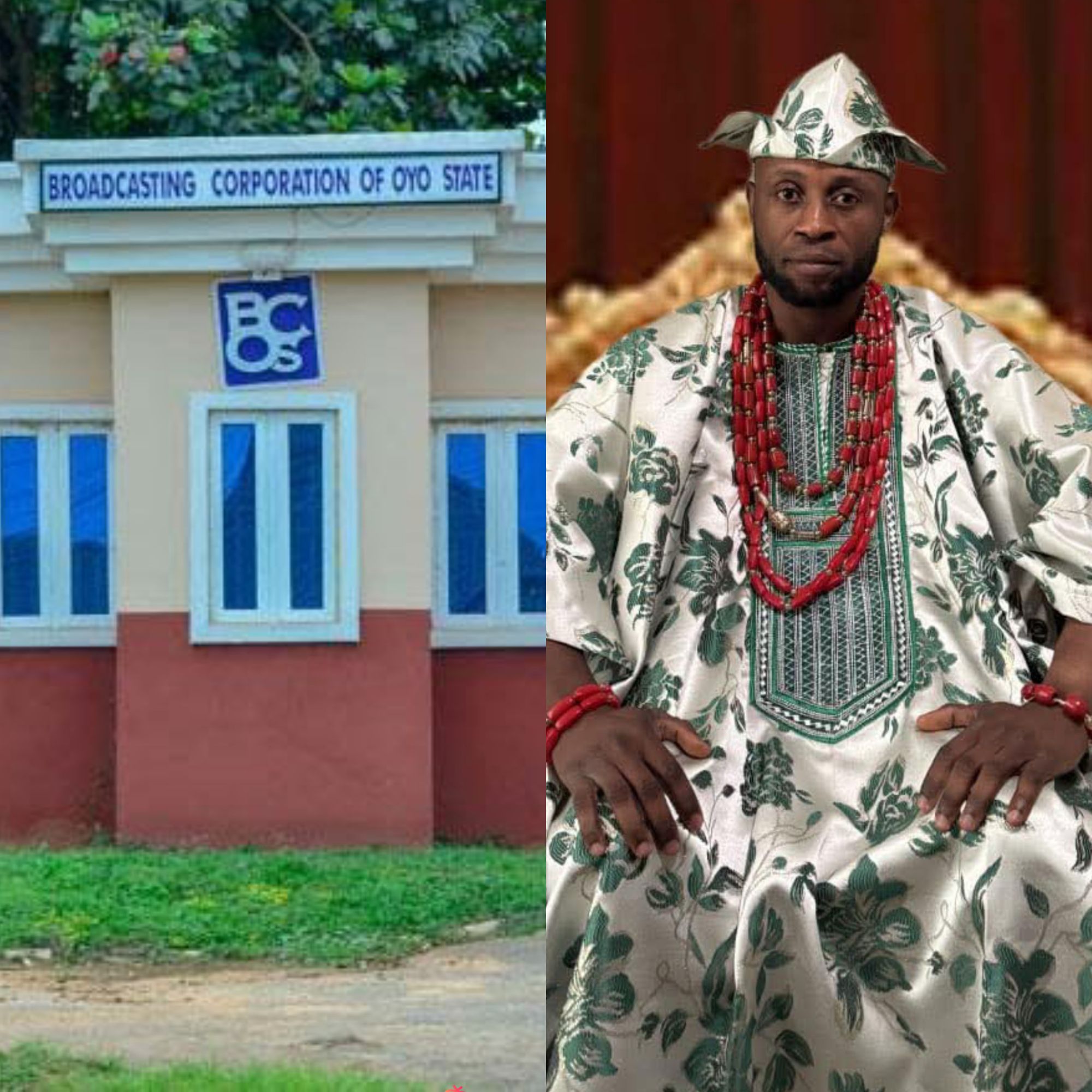
Former BCOS union chairman Kayode Olagunju urges management to respect workers’ and trade union rights, saying trust is key to rebuilding the corporation.
A former staff member and ex-chairman of the Radio, Television, Theatre and Arts Workers Union (RATTAWU) at the Broadcasting Corporation of Oyo State (BCOS), Kayode Olagunju, has called for renewed respect for workers’ rights and trade union activities as part of efforts to revive the state-owned media organisation.
He said rebuilding the broadcaster should go beyond infrastructure and reforms to include restoring confidence among employees.
In a statement titled “BCOS Must Rebuild Trust by Respecting Workers and Trade Union Rights,” Olagunju expressed concerns over recent developments involving union officials and industrial relations within the corporation.
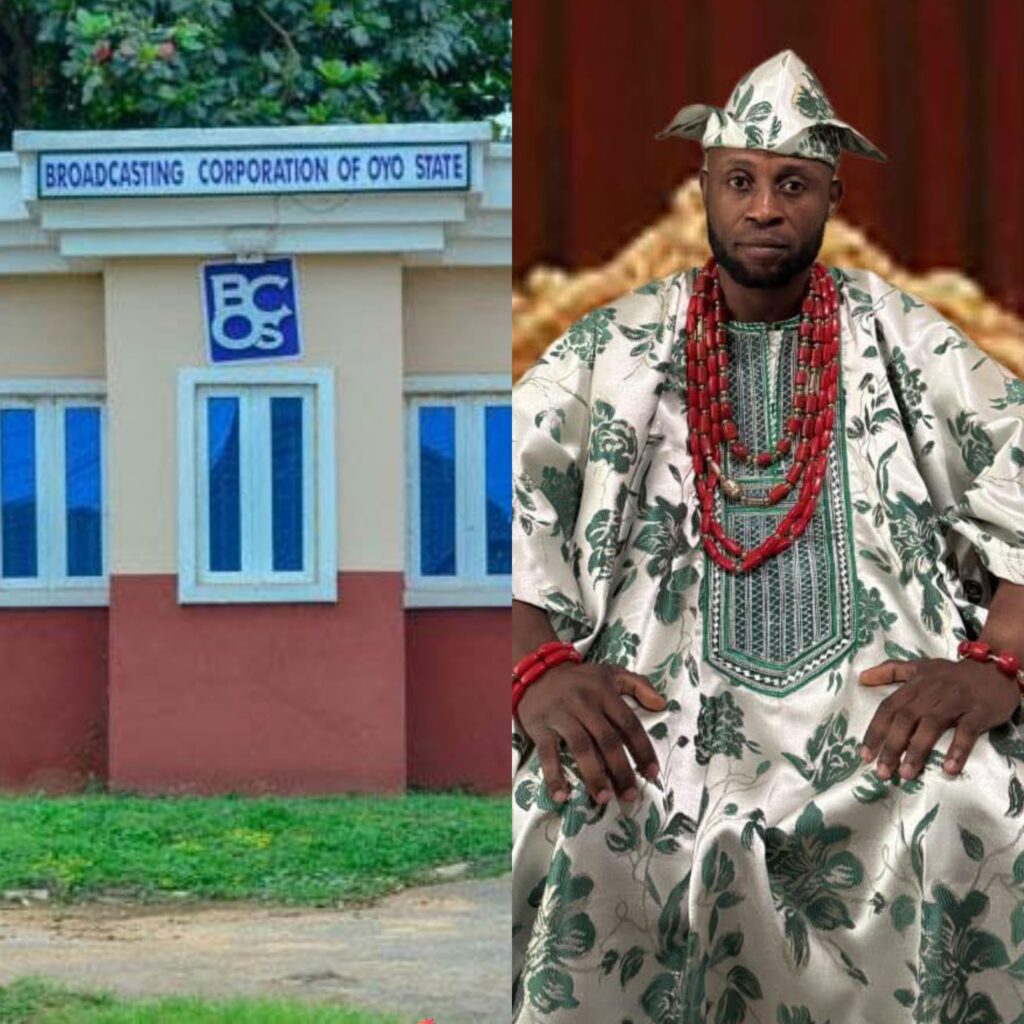
According to him, fostering dialogue, fairness and respect for legally recognised trade unions is essential if BCOS is to regain its credibility and strengthen its future.
The statement reads:
BCOS Must Rebuild Trust by Respecting Workers and Trade Union Rights

The recent Sunday Independent feature, “BCOS: Can Oyo Broadcasting Giant Find Its Voice Again?”, raises important questions about the future of the Broadcasting Corporation of Oyo State (BCOS). It is a conversation that is both timely and necessary.

Having served as a former staff member and once chaired the RATTAWU BCOS Chapter, I view the current situation with both professional concern and institutional memory. BCOS is not just another public organisation; it is a legacy institution that shaped broadcasting in Oyo State and beyond.

That legacy was built by workers — journalists, engineers, producers, presenters, technicians and support staff — whose commitment gave the Corporation its identity. Any attempt to rebuild BCOS must therefore begin with restoring confidence among its workforce.

In recent months, developments within the Corporation have raised concerns about industrial relations and the treatment of elected union officials.

Following a joint inter-denominational prayer programme organised by the RATTAWU and NUJ BCOS chapels, warning letters were issued to the chairmen of both unions — Comrade Niyi Faleti (RATTAWU) and Comrade Ademola Balogun (NUJ). The letters, arising from their roles in organising the programme, reportedly introduced the requirement of Management approval for future union activities within the Corporation.

This development has been interpreted by many workers as an intrusion into the internal affairs of recognised trade unions.

Subsequently, Comrade Aliyu Bashiru, Secretary of the RATTAWU BCOS Chapel, was queried, suspended and later redeployed to Oke-Ogun FM over a voice note said to relate to mobilisation for the union programme. Comrade Balogun was redeployed to Ajilete FM, while Comrade Faleti was reportedly directed to discontinue his long-running programme, “Gbádùn Èmi Ẹ,” on Oluyole FM.

A notice placed on the RATTAWU Hall indicating that the union office was under lockout further heightened tensions within the Corporation.

Individually, management may have explanations for each of these actions. But collectively, they have created a perception of hostility toward legitimate union activity. In industrial relations, perception matters almost as much as intent, because it shapes trust.

There are also reports that veteran labour leaders who attended peace meetings convened by the RATTAWU Oyo State Council may face redeployment. Those meetings reportedly included respected figures such as former General Manager, Alhaji Kunle Junaid, and were aimed at promoting reconciliation.

If accurate, such reports require clarification. Participation in peace-building efforts should ordinarily strengthen industrial harmony, not attract administrative consequences.

The central issue, however, is not about individuals. It is about principle.

Trade unions in Nigeria are legally recognised under the Constitution and the Trade Unions Act. The right to freedom of association is guaranteed, and union activities are protected within the framework of labour law.

These protections do not undermine management authority. Rather, they ensure balance, fairness and stability in the workplace.

Management has a duty to maintain discipline and efficiency. But that responsibility must be exercised within clear legal and industrial relations boundaries, especially where recognised union activities are concerned.

BCOS has experienced its strongest periods when management and staff operated on the basis of mutual respect and dialogue. Where that balance is lost, institutions inevitably suffer.

Rebuilding BCOS will therefore require more than technical upgrades or structural reforms. It will require rebuilding trust between management and workers.

That trust can only be restored through respect for due process, constructive engagement with unions, and a clear separation between disciplinary action and legitimate trade union activity.

BCOS belongs to the people of Oyo State. Its survival depends not only on policy direction but also on the confidence of those who keep it running every day.

If the Corporation is to regain its voice, it must also regain fairness, stability and mutual respect within its workforce.

Only then can BCOS truly reclaim its place as a leading public broadcasting institution.

— Kayode Olagunju
Former Staff Member, BCOS
Former Chairman, RATTAWU BCOS Chapter
Related news:
BCOS: CDWR condemns kneeling photo of labour leaders in Oyo State

Traditional religion group accuses BCOS Chair of alleged discrimination, seeks Makinde’s intervention

Oyo BCOS crisis: Unions petition Government over salary delay, deductions,  suspensions

BCOS RATTAWU congress cancelled over security concerns, workers protest
About The Author
