

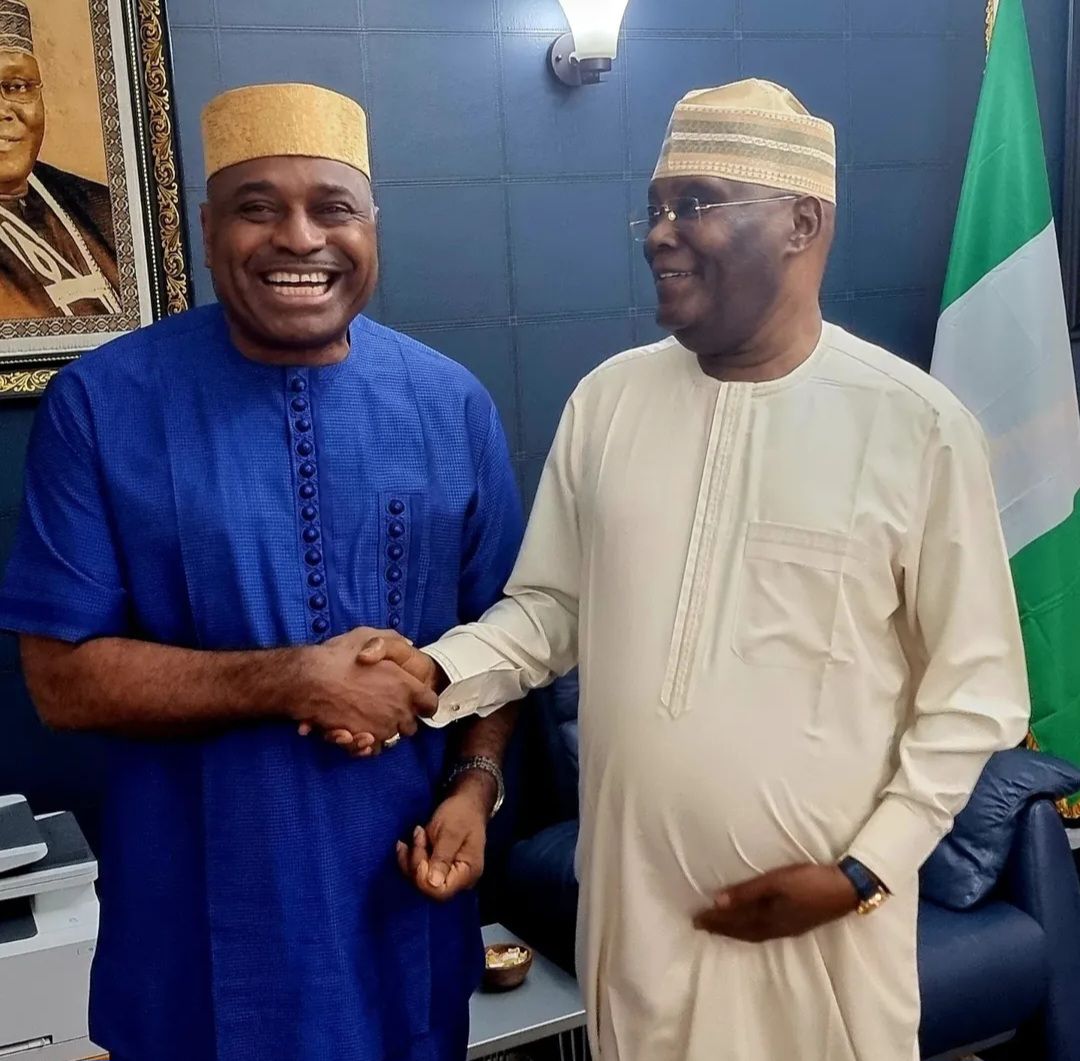
Atiku’s campaign spokesman Kenneth Okonkwo explains how the proposed fuel affordability plan could lower petrol prices through local refining and cheaper crude.
The debate over Nigeria’s petrol pricing has taken a fresh political turn following an explanation by Kenneth Okonkwo, spokesman for former Vice-President Atiku Abubakar’s 2027 presidential campaign, on how the former vice-president intends to make fuel cheaper if elected.
Okonkwo said Atiku’s proposal should not be interpreted as an attempt to bring back the petrol subsidy system that existed before the policy was scrapped.
Instead, he described the proposal as an intervention designed to reduce the cost of petrol through domestic refining and access to reasonably priced crude oil.
The clarification comes amid growing political arguments over the future of petrol pricing in Nigeria, with the issue expected to feature prominently in campaigns ahead of the 2027 presidential election.
Speaking on Channels Television’s Sunday Politics, Okonkwo said the central objective of Atiku’s proposal was to ensure that ordinary Nigerians could purchase petrol at a more affordable price.
He referred to the proposed policy as the Atiku Fuel Affordability Plan (AFAP), explaining that it would focus on reducing the cost of production rather than simply paying importers to keep petrol prices artificially low.
According to him, the approach would require the government to make crude oil available to domestic refineries at a price that would enable them to produce refined petroleum products at a lower cost.
Okonkwo argued that cheaper access to crude would help local refineries reduce their operating costs, creating the possibility of lower pump prices for motorists, households and businesses.
Related news:
- Atiku Abubakar appoints Kenneth Okonkwo as campaign spokesperson for 2027
- Senator Sharafadeen Alli: From Ibadan North Local Government to the National Assembly and ECOWAS Parliament
He quoted Atiku as saying that the government under his administration would provide crude to local refineries at a price considered fair enough for them to produce fuel at a reduced cost for Nigerians.
The proposal places domestic refining at the centre of Atiku’s approach to the fuel crisis.
For Okonkwo, Nigeria’s long-standing dependence on imported petrol is one of the major reasons the country struggled with the previous subsidy arrangement.
He argued that the situation would have been different if successive administrations had succeeded in establishing sufficient refining capacity to meet the country’s fuel requirements.
Nigeria produces crude oil but has historically relied heavily on imported refined petroleum products to satisfy domestic demand.
That dependence has exposed the country to international oil prices, foreign exchange pressures and other costs associated with importing fuel.
Okonkwo therefore argued that the country’s energy policy should focus more heavily on refining crude locally instead of continuing to depend on imported petrol.
He said the old subsidy system became problematic partly because Nigeria was importing virtually all of its fuel while simultaneously using public funds to bridge the difference between the market cost and the price paid by consumers.
According to the campaign spokesman, the arrangement created opportunities for alleged manipulation of import volumes and prices.
“This was the way the subsidy of the old operated. They were importing 100 per cent of the fuel. We didn’t have any refinery,” he said.
Okonkwo’s comments were made in response to criticism from President Bola Ahmed Tinubu, who has rejected the idea of returning to a subsidy regime.
Atiku had earlier stated that he would restore petrol subsidy if elected president in 2027, triggering criticism from the Tinubu administration and renewed debate among Nigerians about the policy.
Tinubu described Atiku’s proposal as evidence of what he called “serious ignorance of governance and economy,” maintaining that the former subsidy system placed a substantial financial burden on the country.
The President’s criticism has also added another dimension to the political debate because the removal of petrol subsidy was one of the major economic decisions taken by his administration.
Since the removal, Nigerians have experienced significant changes in petrol prices, with the development also affecting transportation costs and the prices of goods and services.
However, Atiku’s campaign believes affordability can be achieved through a different mechanism.
Okonkwo insisted that the former vice-president was not proposing a return to the structure under which the government paid substantial amounts to subsidise imported fuel.
“It is ignorance of Tinubu to say that Atiku wants to go back to the subsidy of the old,” he said.
He maintained that Atiku’s proposed policy would be based on making fuel cheaper at the production stage.
The campaign spokesman also argued that increased domestic refining could help Nigeria reduce its vulnerability to international petroleum market movements.
If more crude is processed within the country, he suggested, Nigeria could reduce some of the costs associated with importing refined products and improve the availability of petrol.
The argument comes against the backdrop of renewed attention to Nigeria’s refining industry, particularly as policymakers and political actors continue to debate how best to achieve energy security.
For Atiku’s camp, the issue is not simply whether subsidy should exist or be removed. Instead, the focus is on finding a sustainable way to ensure Nigerians can access petrol without placing an excessive financial burden on government.
Okonkwo stressed that the proposed arrangement should therefore not be confused with the subsidy structure Nigerians experienced in previous years.
“Atiku is not going back to that and cannot even go back to that,” he said.
The disagreement highlights how petrol pricing is likely to become a major campaign issue as political parties prepare for the 2027 elections.
While the Tinubu administration has continued to defend subsidy removal as an important economic reform, Atiku’s camp is presenting its fuel affordability proposal as an alternative that combines government intervention with increased domestic refining.
The debate is expected to intensify as political parties unveil their economic programmes and seek to convince Nigerians that their policies can address the rising cost of living.
For millions of Nigerians, however, the most important question may ultimately be how any proposed policy translates into the price displayed at filling stations.
As the 2027 presidential contest approaches, the competing positions of Tinubu and Atiku on petrol pricing could consequently become an important part of the wider debate over Nigeria’s economy, energy security and the cost of living.
About The Author
