Nigeria’s opposition politics has again been stirred by strong criticism directed at President Bola Ahmed Tinubu after remarks he made during a political meeting triggered concern among rival parties.
The African Democratic Congress (ADC) says the president’s comments suggest a troubling view of governance and democracy, warning that leadership should never be treated like a competitive game.
The criticism arose after a recent Iftar gathering involving political stakeholders and members of the Inter-Party Advisory Council (IPAC).
During the meeting, the president reportedly dismissed complaints from opposition parties regarding the Electoral Act 2026 Amendment and told critics to challenge him during elections instead of raising objections.
In his remarks, Tinubu said politics often feels enjoyable only when one is winning.
While some observers interpreted the statement as a casual political comment, the ADC argued that the implication was far more serious.
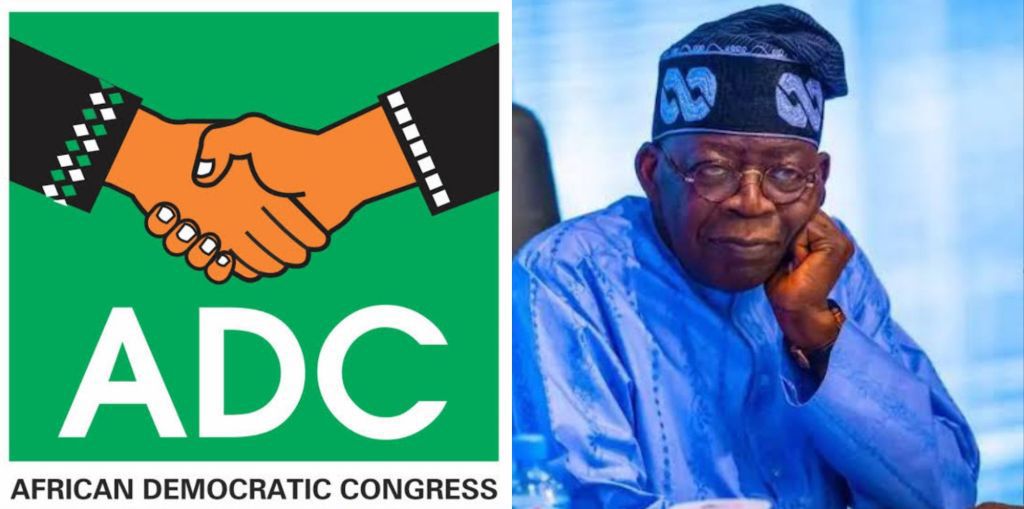
According to the party, such statements could trivialise the responsibilities attached to governance in a democratic system.
Reacting through a statement signed by its National Publicity Secretary, Bolaji Abdullahi, the opposition party said the president’s remarks raised serious concerns about his understanding of leadership responsibilities.
The party insisted that governance should never be reduced to a contest between political rivals.
The ADC criticises Tinubu strongly for what it described as a dismissive approach to legitimate concerns raised by opposition groups.
According to the statement, democracy requires more than electoral victories; it also demands accountability, transparency and respect for institutions.
The party further noted that the president’s remarks came at a time when millions of Nigerians are struggling with difficult economic realities.
Rising living costs, unemployment, and insecurity remain key issues affecting citizens across the country.
The ADC therefore argued that political leaders should show greater sensitivity when discussing governance matters.
In explaining why the controversy matters, the party said the Electoral Act amendment has already generated debate within Nigeria’s political landscape.
Opposition groups believe some provisions could potentially disadvantage smaller parties and limit fair competition.
For this reason, the ADC criticises Tinubu for dismissing such concerns rather than encouraging open dialogue.
According to the party, democracy functions best when leaders respect opposing voices and address policy concerns through engagement rather than political rhetoric.
The statement suggested that a dismissive tone from the highest office in the country could weaken public confidence in democratic institutions.
The ADC also used the opportunity to highlight broader governance challenges facing the country.
It pointed out that security threats continue to affect several regions, while economic hardship has become a daily reality for many households.
In the party’s view, the focus of national leadership should be on solving these pressing issues rather than framing politics as a game of winners and losers.
Another key argument raised in the statement is that electoral success alone does not automatically translate into effective governance.
While the ruling administration may celebrate political victories, the ADC insists that real success should be measured by improvements in citizens’ lives.
For example, the party referenced the growing number of unemployed graduates who struggle to find opportunities despite completing higher education.
It also highlighted the increasing difficulty many families face in affording basic necessities such as food and transportation.
In this context, the ADC criticises Tinubu again, stressing that political rhetoric should reflect the seriousness of the presidency.
The party argued that Nigerians expect their leaders to acknowledge the weight of the office and demonstrate commitment to responsible governance.
Furthermore, the opposition party warned that treating politics as entertainment or competition could send the wrong message to citizens, especially younger voters who are already sceptical about political leadership.
Democracy, it said, should represent a system of service rather than a contest for personal or party advantage.
The ADC criticises Tinubu not only for the specific comment but also for what it sees as a broader pattern of dismissing opposition voices.
According to the party, strong democracies thrive when leaders welcome scrutiny and debate rather than view criticism as a challenge to political dominance.
Despite the strong tone of its statement, the party maintained that its intention is to encourage a more responsible political environment.
It urged the government to recognise that democratic leadership requires humility, accountability and constant engagement with citizens.
Political analysts note that disagreements between ruling and opposition parties are common in democratic systems.
However, statements made by national leaders often carry significant weight and can shape public perception of governance and political culture.
For the ADC, the issue goes beyond a single remark. The party believes the controversy highlights the need for deeper reflection about the direction of Nigeria’s democracy and the role of leadership in strengthening public trust.
Ultimately, the opposition party concluded that the presidency should never be viewed as a trophy or prize.
Instead, it should be seen as a duty that requires seriousness, discipline and dedication to the welfare of citizens.
As political debates continue across the country, the ADC criticises Tinubu once more while calling on leaders at all levels to prioritise national progress over political rivalry.
In its view, democracy must remain a system built on responsibility, fairness and service to the people.
Ireport247news
About The Author