

The All Progressives Congress (APC) has recorded a significant political development with the defection of Abba Atiku Abubakar, son of former Vice President Atiku Abubakar, as part of ongoing efforts to consolidate support ahead of President Bola Ahmed Tinubu’s re-election bid.
Abba Atiku Abubakar was formally received into the ruling party by the Deputy Senate President, Senator Barau Jibrin, alongside the National Vice Chairman of the APC (North East), Mustapha Salihu, during a political engagement that underscored the party’s renewed push to strengthen its grassroots base, particularly in northern Nigeria.
The defection has attracted considerable political attention, given Abba Atiku’s family background and his previous association with structures aligned with the opposition Peoples Democratic Party (PDP), under which his father contested multiple presidential elections.
Beyond joining the APC, Abba Atiku announced a major restructuring of his political platform, renaming the Atiku Haske Organisation to the Haske Bola Tinubu Organisation, a move widely interpreted as a clear signal of loyalty to President Tinubu and the ruling party’s political direction.
Strategic Defection and Political Repositioning
Political observers describe Abba Atiku’s defection as more than a symbolic crossover, noting that it represents a calculated effort to realign an existing grassroots network with the APC’s national political strategy.
The Haske structure, which previously operated across several northern states, is expected to play a role in youth mobilisation and voter outreach as the ruling party intensifies preparations for future electoral contests.
Speaking at the event, APC leaders praised the move, describing it as evidence of growing confidence in the Tinubu administration and its reform agenda.
They also expressed optimism that Abba Atiku’s involvement would help broaden the party’s appeal among younger voters, particularly in the North-East and parts of the North-West.
While the APC has continued to attract defectors from opposition parties since the 2023 general election, Abba Atiku’s entry into the ruling party carries added political weight due to his lineage and the timing of the move.
Who Is Abba Atiku Abubakar?
Abba Atiku Abubakar is a Nigerian businessman and emerging political figure who has, in recent years, steadily built a political identity distinct from his father’s long-standing career.
As the son of former Vice President Atiku Abubakar, who served from 1999 to 2007 and remains one of Nigeria’s most prominent political figures, Abba Atiku grew up around national politics but initially maintained a low public political profile.

Unlike his father, whose career has been anchored in decades of party politics and presidential contests, Abba Atiku largely operated behind the scenes for several years, focusing on business interests, youth engagement initiatives, and policy-related interactions before stepping more visibly into partisan politics.
Educated in Nigeria and abroad, Abba Atiku is known to have professional exposure in private-sector and policy-oriented environments.
Associates describe him as part of a younger generation of politically conscious Nigerians seeking to combine business experience with structured political participation.
His first major political emergence came during the build-up to the 2023 general election, when he founded the Atiku Haske Organisation, a grassroots movement designed to mobilise youth support, particularly across northern Nigeria.
The organisation gained traction in states such as Adamawa, Kano, Bauchi, Gombe, and parts of the North-West, focusing on voter education, political awareness, and community mobilisation.
Although the group was initially aligned with the presidential ambition of Atiku Abubakar under the PDP, insiders note that Abba Atiku’s leadership approach prioritised decentralised coordination and youth-driven participation rather than traditional elite-led political structures.
From Atiku Haske to Haske Bola Tinubu
The decision to rename his political organisation following his defection to the APC is viewed by analysts as a strategic recalibration rather than a dismantling of an existing structure.
By transforming Atiku Haske Organisation into Haske Bola Tinubu Organisation, Abba Atiku appears to be repositioning an already functional grassroots network to support President Tinubu’s re-election drive.
Political analysts say the move reflects a broader trend in Nigerian politics, where younger political actors are increasingly making pragmatic choices driven by access, influence, and perceived governance direction rather than inherited party loyalties.
Some observers also see the defection as a reflection of generational shifts within political families, where political allegiance is no longer automatically transferred from parent to child.
Reactions to Abba Atiku’s defection have been mixed. Supporters within the APC have hailed the move as a boost to the party’s northern outreach, while some opposition figures have downplayed its significance, arguing that individual defections do not necessarily translate into mass electoral shifts.
Nevertheless, analysts agree that Abba Atiku’s crossover could have symbolic implications, particularly in the North-East, where political allegiances remain fluid and youth engagement is increasingly decisive.
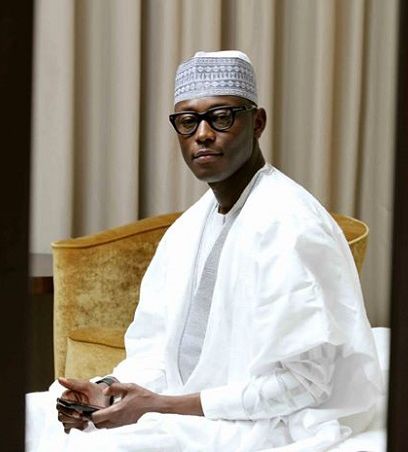
While his move has inevitably drawn attention because of his father’s stature, close associates insist that Abba Atiku’s political choices reflect personal conviction and long-term strategic calculation rather than family influence.
As Nigeria’s political landscape continues to evolve ahead of future elections, Abba Atiku Abubakar’s entry into the APC adds another layer to the complex realignments shaping the country’s democratic process, especially within influential political families and youth-driven political movements.
About The Author


