

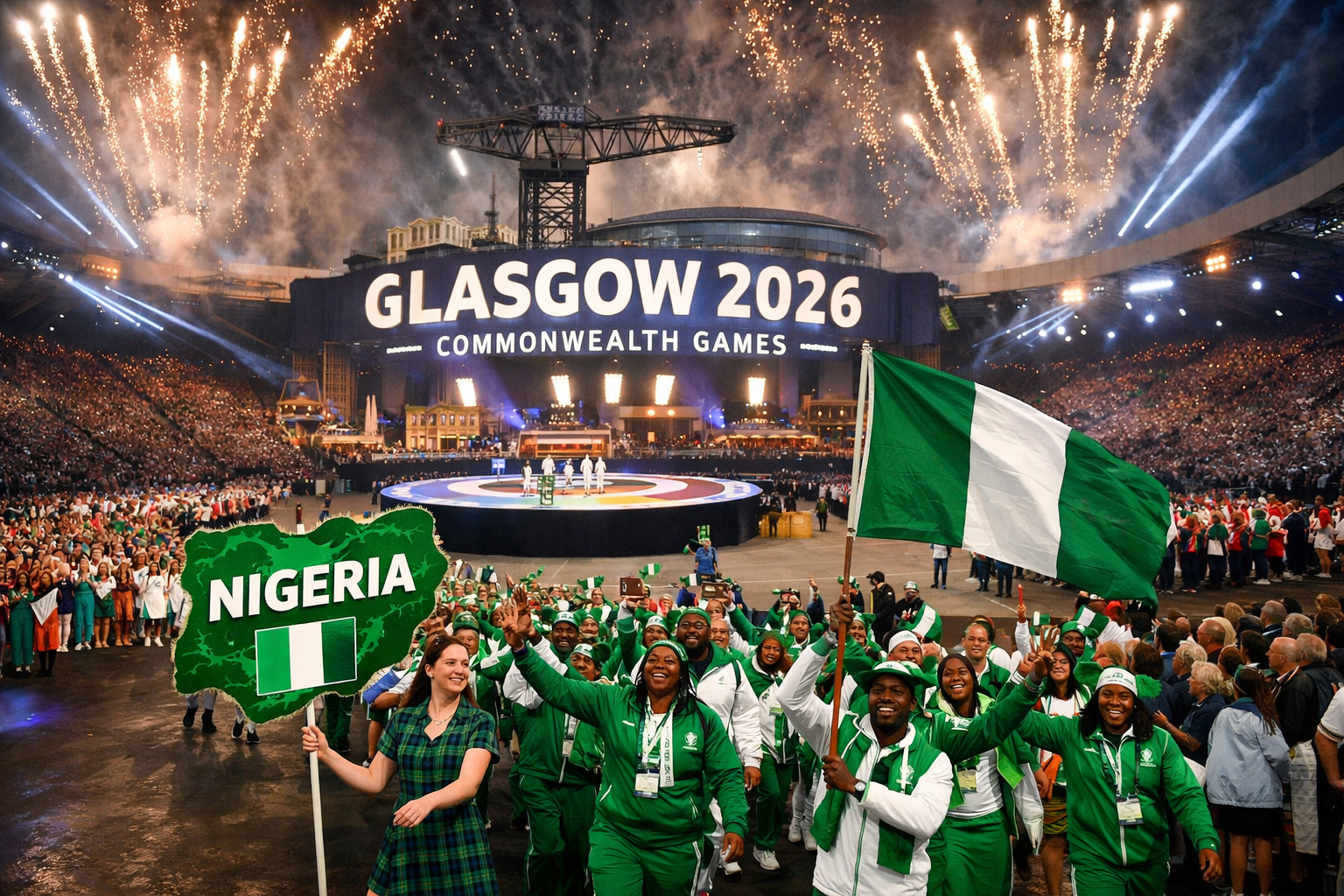
The 2026 Commonwealth Games in Glasgow Scotland, scheduled from 23 July to 2 August, promises to be a landmark event, gathering athletes from approximately 74 nations to compete in elite sports.
Organisers have confirmed a streamlined programme of ten sports, including athletics, swimming, boxing, cycling, and gymnastics, designed to ensure maximum global engagement while maintaining the integrity and competitive intensity of each discipline.
Para-sports will be fully integrated into the Games schedule, reflecting a continued commitment to inclusivity, equal opportunity, and the celebration of athletic excellence across athletes of all abilities on the global stage.
Team Nigeria recently unveiled its ambassadors, a strategic move by the National Sports Commission aimed at strengthening national preparation, boosting athlete morale, and reinforcing Nigeria’s visibility and competitive presence at major international events.
The ambassadorial programme will focus on mentorship, support systems, and motivational engagement, offering athletes expert guidance on mental readiness, nutrition, and tactical performance ahead of their participation in the 2026 Commonwealth Games.
National Sports Commission officials emphasized that these preparatory measures are part of a broader strategy to enhance Nigeria’s international reputation, improve medal prospects, and establish sustainable frameworks for future sporting success.
Athletics remains one of the focal sports for Nigeria, with sprinters, jumpers, and throwers undergoing specialized training camps, performance monitoring, and international friendly competitions to fine-tune techniques and tactical strategies.
Swimming and boxing also receive targeted attention, with national trials and qualifiers held in multiple cities, ensuring that the best athletes represent Nigeria in Glasgow and maximize chances of podium finishes across competitive events.
Cycling and gymnastics are included in Nigeria’s strategic plan, with both sports benefiting from international coaches, high-performance equipment, and intensive technical training to meet the rigorous demands of the 2026 Commonwealth Games schedule.
Para-sports integration underscores Nigeria’s commitment to equality, with visually impaired swimmers, wheelchair racers, and other para-athletes receiving specialized coaching, adaptive equipment, and psychological support to compete alongside able-bodied athletes seamlessly.
The Games’ opening ceremony in Glasgow is expected to highlight cultural diversity, technological innovation, and national pride, offering an impressive visual spectacle while reinforcing the unifying values of the Commonwealth and the importance of global cooperation.
Nigeria’s athlete selection process emphasizes fairness, performance data analysis, and strategic positioning, ensuring that all representatives, including young talents, receive adequate exposure, training, and evaluation prior to final inclusion in Team Nigeria.
Officials confirmed that the Games’ infrastructure in Glasgow has been upgraded to accommodate both high-performance competitions and spectator experiences, including accessible facilities, digital engagement tools, and sustainability-focused operations.
Team Nigeria ambassadors will act as liaisons between athletes and management, coordinating training schedules, media interactions, and logistical arrangements while maintaining a focus on athlete well-being and peak competitive performance.
The National Sports Commission has also prioritized injury prevention, nutrition, and recovery protocols, establishing partnerships with sports scientists, physiotherapists, and medical specialists to minimize risks and optimize readiness for the 2026 Commonwealth Games.
Officials noted that the Games represent an opportunity to showcase emerging Nigerian talent, particularly in disciplines where the country historically underperforms, allowing athletes to gain international exposure and experience under high-pressure conditions.
Athlete preparation camps incorporate psychological conditioning, with experts guiding participants on stress management, focus enhancement, and resilience strategies to ensure optimal performance during the intense competitive environment of Glasgow.
Swimming preparations include rigorous lap training, stroke technique refinement, and endurance conditioning, with national coaches emphasizing competitive starts, turns, and pacing to maximize medal-winning potential.
Boxing preparations focus on agility, precision, and tactical awareness, with fighters participating in international sparring sessions, performance reviews, and analytics-based strategies to strengthen in-ring decision-making against diverse opponents.
Cyclists are undergoing high-altitude training, equipment optimization, and strategic route familiarization, allowing athletes to adapt to Glasgow’s terrain and competitive pace while maintaining peak energy and performance levels throughout multi-stage events.
Gymnastics athletes are refining routines across multiple apparatuses, integrating difficulty scoring, artistic execution, and synchronization techniques to ensure that Team Nigeria meets international judging standards and delivers high-scoring performances.
Para-athletes, including wheelchair racers and visually impaired swimmers, benefit from personalized training programs, adaptive technologies, and coaching innovations, reflecting the Games’ inclusive framework and Nigeria’s commitment to equity in competitive sports.

Officials expect that Glasgow will host thousands of athletes, coaches, and support staff, creating a vibrant environment of cultural exchange, sportsmanship, and mutual learning, highlighting the Commonwealth’s shared history and future aspirations.
Media coverage will amplify Nigeria’s participation, with broadcasters providing live updates, interviews, and behind-the-scenes insights into Team Nigeria’s preparations, generating public interest and inspiring youth participation in sports nationwide.
National Sports Commission efforts aim to ensure that logistical challenges, such as travel, accommodation, and equipment management, are streamlined and efficient, reducing stress for athletes and maximizing time spent on training and competition readiness.
Officials stressed that the Games serve not only as a competitive arena but also as a platform for networking, knowledge sharing, and establishing international partnerships to benefit Nigerian sports development beyond 2026.
Athlete welfare remains a core priority, with monitoring systems for physical health, psychological support, and real-time performance feedback integrated into daily training, ensuring competitors are prepared holistically for the demands of the Games.
Team Nigeria ambassadors play a crucial role in mentorship, encouraging ethical behavior, discipline, and professionalism while also advocating for the responsible use of digital media and engagement with fans to maintain positive public representation.
Nigeria’s focus on para-sports integration aligns with global movements for equality, ensuring that athletes of all abilities receive equal training opportunities, competitive exposure, and recognition for achievements at the 2026 Commonwealth Games.
Officials highlighted that the Games’ legacy will extend beyond competition, inspiring investment in youth sports, facility upgrades, and long-term athlete development programs to sustain Nigeria’s international sporting competitiveness.
Athlete selection emphasizes not only current performance but also potential for future development, creating a pipeline of talent for successive Commonwealth Games, Olympic participation, and other international tournaments.
Preparatory activities include international friendlies, simulation tournaments, and cross-training in complementary sports to enhance versatility, improve adaptability, and ensure athletes can respond effectively to unexpected competitive scenarios.
Nutrition and recovery programs have been personalized, with dietary plans, hydration monitoring, and rest schedules carefully calibrated to maximize energy levels, prevent fatigue, and enhance performance across multiple sports disciplines.
Officials confirmed that public engagement programs, including fan outreach, school visits, and media briefings, aim to increase awareness and excitement around Team Nigeria’s participation while promoting sports culture among the next generation.
Read also:Cristiano Ronaldo stops Casemiro Inter Miami move
The National Sports Commission continues to collaborate with international federations, coaches, and experts to benchmark Nigeria’s training and performance standards against global best practices, ensuring athletes remain competitive on the world stage.
Glasgow’s venues will feature state-of-the-art technology, accessible facilities, and sustainable practices, creating an optimal environment for athletes while promoting environmental responsibility and innovation during the 2026 Commonwealth Games.
In conclusion, the 2026 Commonwealth Games in Glasgow Scotland represent a pivotal opportunity for Nigeria to enhance international sporting reputation, showcase athletic talent, and demonstrate inclusive, high-performance preparation for elite competition.