Naira Exchange Rate: Fresh Week Begins with Mixed Signals Across Official and Parallel Markets
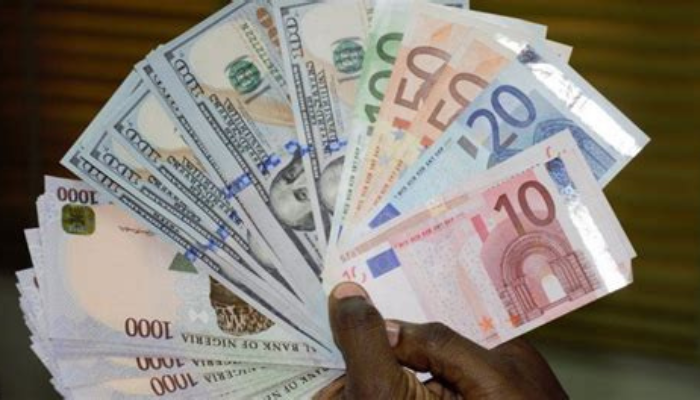
Nigeria’s foreign-exchange market opened the new week with renewed volatility, as the Naira exchange rate fluctuated across official and parallel market windows despite improved liquidity interventions by financial institutions.
Currency traders, analysts, importers, and digital-finance users are closely monitoring the latest price movements, which reflect a blend of global currency pressures, domestic demand spikes, and speculative behaviour.
Checks across major FX-tracking platforms and market operators showed that the Naira struggled to maintain stability as the week commenced.
At the official window, the Naira traded around ₦1,449.95/$1, reflecting slight depreciation linked to weekend liquidity gaps.
On the parallel market, average rates hovered between ₦1,460 and ₦1,485 per dollar, depending on location, time of day, and transaction size.
The euro and pound sterling followed similar patterns.
The official rate for the euro opened at about ₦1,685.80/€1, while the pound traded near ₦1,928.19/£1.
However, in the black-market segment, traders quoted the euro between ₦1,700–₦1,710, and the pound between ₦1,970–₦1,995, signalling sustained pressure from increased demand for European currencies ahead of holiday-season travel and payments.
The Canadian dollar also reflected divergent pricing, with interbank estimates placing it between ₦1,400–₦1,450, while parallel market operators offered ₦1,150–₦1,250, depending on buy- or sell-side transactions.
Naira Exchange Rate Trends Driven by Seasonal Demand, Dollar Scarcity, and Policy Expectations
Market analysts attribute this week’s fluctuations in the Naira exchange rate to a confluence of factors, including rising end-of-year foreign-currency demand, unsettled investor sentiment, and fluctuations in crude-oil receipts.
The holiday season typically sees an uptick in demand for dollars, euros, and pounds as Nigerians prepare for international travel, school-fee payments, import settlements, and diaspora remittances.
Experts also note that the global strength of the US dollar continues to exert pressure on emerging-market currencies.
With the dollar strengthening against major global currencies due to improved US economic data, currencies like the naira face additional resistance in maintaining a stable trading band.
Amid these pressures, Central Bank of Nigeria reforms aimed at unifying the forex market, curbing arbitrage opportunities, and fostering transparency continue to shape market decisions.
However, despite improvements in inflows and clearance of some foreign-exchange backlogs, the impact has yet to fully stabilise parallel market pricing.
Naira Exchange Rate Outlook for Businesses, Households, and Investors
For businesses, especially import-dependent enterprises, the volatility in the Naira exchange rate continues to raise cost concerns.
Many have adopted shorter pricing cycles to avoid losses stemming from rapid currency depreciation. Traders dealing in electronics, automotive parts,
pharmaceuticals, and luxury goods have reportedly updated their price lists multiple times in recent weeks.
For households, the pressure is also evident.
International school fees, medical travel, and e-commerce subscriptions—denominated in foreign currencies—are all more expensive due to the widening gap between official and parallel market rates.
Fintech users have also expressed concerns as some platforms adjust their dollar-spending limits to reflect real-time FX fluctuations.
Investors are adopting a cautious approach. While some see opportunities in holding dollar-denominated assets, others are betting on potential naira appreciation if crude-oil prices strengthen later in the month or if the CBN injects additional liquidity.
Naira Exchange Rate Forecast for the Coming Days
Financial analysts project that the Naira exchange rate will remain volatile in the coming days due to short-term uncertainties. However, stability is possible if key variables align, including:
stronger oil-export earnings,
improved diaspora remittances as holiday season peaks,
sustained regulatory monitoring of FX abuses, and
increased official window liquidity.
A mild recovery is possible mid-week if speculative demand cools, though sustained pressure is expected as more Nigerians prepare for December-January travel and financial obligations.
As Nigeria enters a pivotal period of economic activity this December, the Naira exchange rate remains a critical indicator of market confidence and purchasing power.
While the currency continues to navigate complex domestic and global headwinds, policy reforms, diaspora inflows, and improved financial-market transparency may support gradual stabilisation in the weeks ahead
About The Author