Scottish Labour leader Anas Sarwar calls for Keir Starmer resignation, declaring that continuing failures inside Downing Street now threaten Scotland’s future and Labour’s credibility nationwide.
The intervention marks the most serious internal challenge to Starmer’s leadership since Labour entered government, intensifying pressure already fuelled by resignations and mounting criticism.
Speaking in Glasgow, Sarwar said his decision was not personal ambition but political necessity, stressing that his “first loyalty is to Scotland” amid growing instability.
He said the situation had become unavoidable, admitting, “This has not been easy,” while insisting that prolonged uncertainty in London carried real consequences for Scottish voters.
Sarwar warned that failures within No 10 were now directly undermining Labour’s ability to confront the Scottish National party ahead of crucial elections in May.
“I am not willing to sacrifice Scotland’s NHS, our schools, our communities,” Sarwar said, framing his demand as a defensive move for public services.
He argued that a third decade of SNP rule would further damage healthcare, education, and local communities already facing deep structural pressures.
“That’s why the distraction needs to end,” Sarwar stated, adding bluntly, “the leadership in Downing Street has to change.”
The Scottish Labour leader said voters deserved clarity, stability, and focus, particularly as Scotland approaches an election he described as “too important to be missed.”
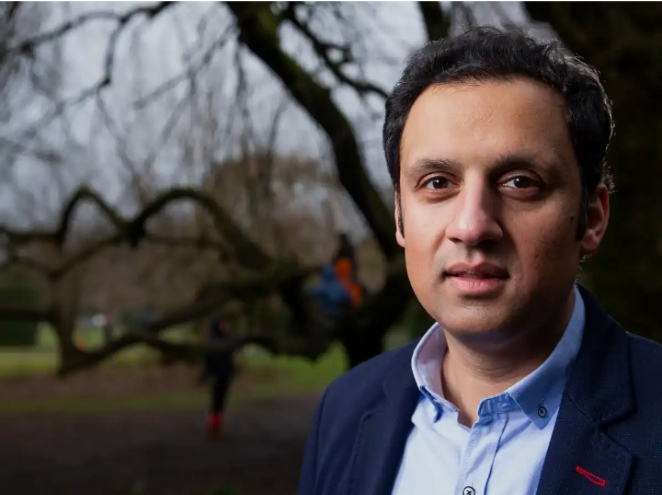
Sarwar warned that Labour could not allow turmoil in Westminster to spill over north of the border and weaken its campaign credibility.
“We cannot allow the failures at the heart of Downing Street to mean the failures continue here in Scotland,” he said during the press conference.
He argued that Scottish voters would ultimately judge Labour harshly if it appeared paralysed by leadership uncertainty at a decisive political moment.
Sarwar also criticised what he described as repeated errors by Starmer, saying that “there have been too many mistakes” at the top of government.
He acknowledged that Labour had delivered some achievements in office but said those successes were being “drowned out” by ongoing controversy.
“No one knows them and no one can hear them,” Sarwar said, arguing that communication failures had compounded political damage.
He linked leadership turmoil directly to declining confidence among Scottish voters already disillusioned with politics and public institutions.
Sarwar also turned his fire toward the SNP government, accusing it of “addiction to secrecy and cover ups with devastating consequences.”
He cited pressures on healthcare, saying, “We have an NHS crisis where too many Scots cannot access the treatment they need.”
Housing shortages were also highlighted, with Sarwar noting that “more than 10,000 Scottish children” were currently homeless.
Public safety concerns featured prominently, as Sarwar said too many young people no longer felt safe “at school or on our streets.”
Despite his call for resignation, Sarwar stressed he was not endorsing an alternative candidate to replace Starmer as Labour leader.
Asked directly who should take over, he replied that he was “not backing an alternative candidate,” signalling focus on principle rather than succession.
The move immediately triggered backlash from political opponents, particularly the SNP, who accused Sarwar of political inconsistency.
Stephen Flynn questioned Sarwar’s judgment, noting that he had recently expressed confidence in Starmer’s leadership.
Flynn said, “Anas Sarwar has been the biggest cheerleader for Keir Starmer – what does that say about his judgement?”
He also criticised Sarwar’s past association with senior Labour figures, suggesting credibility problems ahead of the Scottish elections.
Meanwhile, Labour voices remain divided, with some MPs urging unity and warning against internal warfare during a volatile period.
One Labour MP argued that the public would not forgive months of infighting instead of delivery on policy promises.
Another senior Labour figure cautioned colleagues to “take a breath and think about the consequences” of forcing leadership change.
They argued Starmer was “being honest about what he’s got wrong” and attempting to stabilise government operations.
Others were more pessimistic, with Graham Stringer stating Starmer “cannot survive this amount of chaos” politically.
Stringer suggested the question was “when, not if,” though he advocated waiting for upcoming election results.
Outside Labour, opposition parties intensified pressure, with calls for resignation from Conservatives, Greens, and others.
The Liberal Democrats stopped short of immediate resignation demands but backed a confidence vote to resolve the impasse.
Ed Davey said Starmer should “put up or shut up” and test parliamentary confidence decisively.
Despite mounting criticism, allies of the prime minister insisted he remained determined to continue governing.

Downing Street sources described Starmer as “positive, confident and determined” despite recent senior resignations.
Some senior Labour figures argued that leadership change now could derail manifesto commitments, including reforms to clean up politics.
Margaret Hodge said she wanted Starmer to stay to implement promised changes rather than abandon them mid-crisis.
However, Sarwar’s intervention fundamentally altered the political landscape by breaking senior Labour ranks publicly.
As the most senior Labour figure to call for resignation, his stance added legitimacy to broader internal dissent.
With elections looming and pressure escalating, Labour now faces a defining test of unity, leadership, and political direction.
Whether Starmer survives may depend less on loyalty than on whether stability can be restored quickly and convincingly.